Quick facts
- Hard water is not generally considered a health hazard, but it can create practical problems throughout the home.
- Water testing is the most important first step when selecting a water softener.
- A unit that is too small may regenerate frequently or struggle to maintain the desired water quality.
- Salt-free conditioning systems generally do not remove calcium and magnesium from the water.
- A softener primarily reduces calcium and magnesium, while filtration systems may be designed to address sediment, taste, odor, or specific contaminants.
Hard water is a common concern for homeowners throughout the Texas Hill Country. From cloudy glassware and mineral buildup around faucets to scale inside water heaters, high concentrations of calcium and magnesium can affect everyday household activities and plumbing performance.
Choosing the right water softener for a Hill Country home starts with understanding your water quality. Homes in Spring Branch, Boerne, Bulverde, Kerrville, and surrounding communities may receive water from different municipal systems or private wells, meaning hardness levels and treatment requirements can vary.
A properly selected water softener can reduce hardness minerals, minimize scale formation, and improve the performance of soaps and detergents. However, choosing a system requires more than comparing brands or purchasing the largest available unit.
Bergheim Plumbing, a family-owned plumbing company serving the region since 1998, helps homeowners with water softener installation, service, and repair. This guide explains how to evaluate water hardness, choose the appropriate system capacity, compare treatment technologies, and maintain your equipment.
Why Do Texas Hill Country Homes Experience Hard Water?

Much of the Texas Hill Country contains limestone formations that can influence groundwater chemistry. As water moves through mineral-rich geological formations, it can dissolve calcium and magnesium, the primary minerals responsible for water hardness.
Water hardness varies depending on the source, local geology, and treatment processes. A home supplied by a municipal utility may have different water characteristics from a nearby property using a private well.
Hard water is not generally considered a health hazard, but it can create practical problems throughout the home. Mineral deposits may accumulate on fixtures, reduce water heater efficiency, and interfere with soap and detergent performance.
What Are the Common Signs of Hard Water?
Hard water often leaves visible evidence around sinks, showers, and kitchen appliances. Homeowners may notice white mineral deposits on faucets, cloudy glassware, spots on dishes, or soap residue on shower doors.
Laundry may feel stiff after washing, and soaps may require more product to produce the desired lather. Some people also notice that their skin or hair feels different after bathing, although these symptoms can have several causes.
Mineral buildup inside water heaters and plumbing fixtures is another concern. Over time, scale accumulation may affect equipment performance and increase maintenance requirements.
These symptoms suggest that water testing may be worthwhile, but they cannot establish an exact hardness level.
How Should You Test Your Water Before Choosing a Softener?
Water testing is the most important first step when selecting a water softener. Without knowing the hardness level, homeowners risk purchasing equipment that does not match their water conditions or household demand.
Hardness is commonly measured in grains per gallon (gpg) or milligrams per liter expressed as calcium carbonate. One grain per gallon equals approximately 17.1 milligrams per liter.
Testing helps determine whether softening is appropriate and provides the information needed to size the system correctly.
What Does a Water Hardness Test Measure?
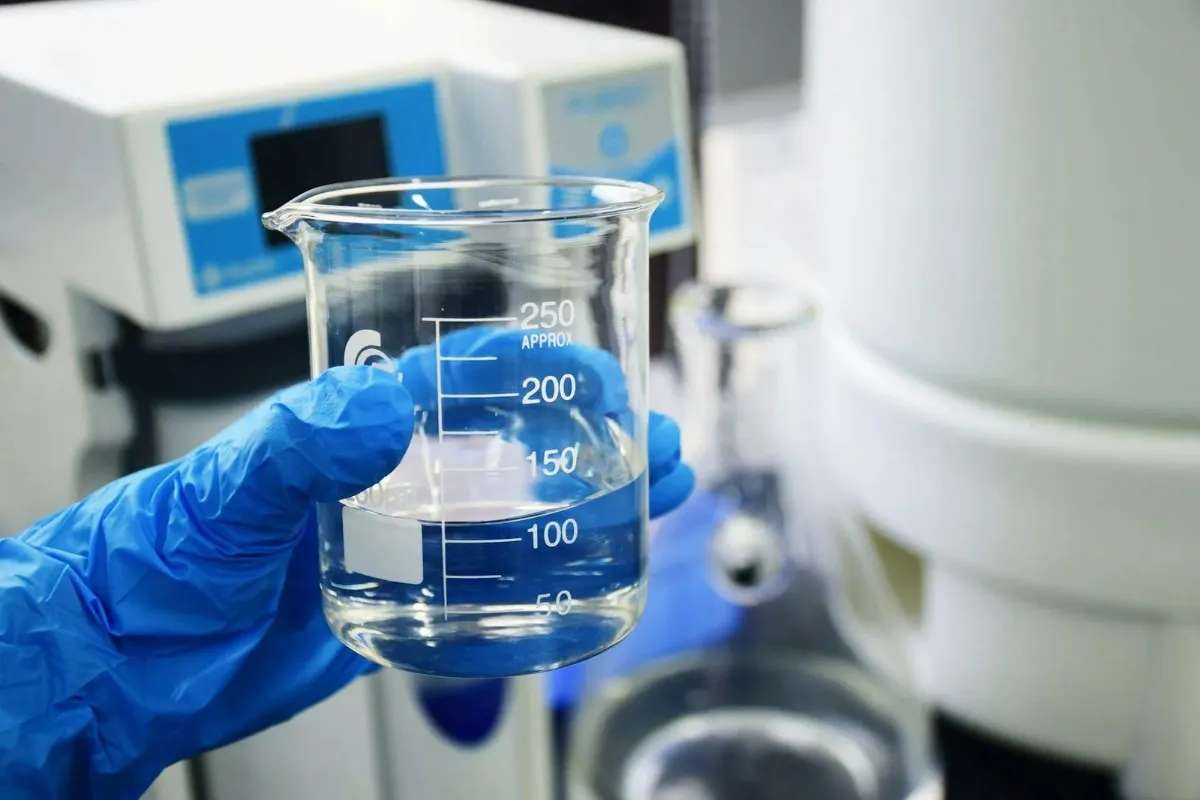
A hardness test measures the concentration of dissolved calcium and magnesium in the water.
As a general reference, water measuring more than approximately 7 gpg is classified as hard, although the need for treatment depends on household preferences and the problems being experienced.
Homeowners can use test strips or laboratory testing, but results may differ in accuracy and scope.
Professional testing can be useful when water chemistry is complex or when the household uses a private well.
Should Well Water Be Tested Differently?
Private well water may require additional testing beyond hardness because its composition depends on local groundwater conditions.
Depending on the property, testing may include iron, manganese, pH, total dissolved solids, and other relevant parameters. Private wells may also require periodic testing for microbial or chemical contaminants.
These results matter because a water softener is designed primarily to remove hardness minerals. It is not a substitute for equipment intended to address every possible water quality concern.
For example, high iron concentrations may require pretreatment or a system specifically designed to handle iron.
Homeowners should select treatment equipment based on actual test results rather than assuming every Hill Country water source has the same characteristics.
What Size Water Softener Does Your Home Need?
Water softener sizing depends on the hardness level, household water consumption, and the system's usable treatment capacity.
A unit that is too small may regenerate frequently or struggle to maintain the desired water quality. An oversized system may involve unnecessary upfront costs and may operate inefficiently if not properly configured.
Manufacturers commonly describe softener capacity in grains, but the advertised capacity does not always represent the amount available between regeneration cycles under normal operating settings.
How Do You Calculate Water Softener Capacity?
A basic sizing estimate begins with household water consumption and measured hardness.
For example, consider a household of four people using an estimated 75 gallons per person daily.
That household would use approximately 300 gallons per day.
If the water hardness measures 15 gpg, the estimated daily hardness load would be:
300 gallons × 15 gpg = 4,500 grains per day.
This calculation provides a starting point for evaluating equipment capacity.
However, final sizing should also consider regeneration frequency, salt efficiency, water usage patterns, and additional water chemistry factors.
A plumber or water treatment professional can help translate these numbers into an appropriate system configuration.
Does Household Size Affect Softener Selection?
Yes. Larger households generally use more water, increasing the amount of hardness minerals a softener must remove.
However, the number of residents is not the only consideration.
Homes with multiple bathrooms, high-flow fixtures, frequent laundry use, or unusually high water consumption may require greater treatment capacity.
Peak flow rate is also important. The system must deliver enough softened water when several fixtures operate simultaneously.
Choosing a unit based only on grain capacity may overlook this requirement.
Should You Choose a Salt-Based or Salt-Free Water Treatment System?
Homeowners often compare conventional salt-based water softeners with salt-free conditioning systems.
Although both may be marketed for hard water concerns, they operate differently and should not be treated as equivalent technologies.
The appropriate choice depends on whether the homeowner wants to remove hardness minerals or primarily address certain effects of scale formation.
How Do Salt-Based Water Softeners Work?
Conventional water softeners use ion exchange resin to remove calcium and magnesium from the water.
As hard water passes through the resin, hardness minerals are exchanged for sodium or potassium ions, depending on the regeneration material.
The system periodically regenerates the resin using a brine solution, allowing it to continue removing hardness minerals.
This technology is widely used when homeowners want measurable reductions in water hardness.
However, salt-based systems require regeneration supplies, periodic maintenance, and an appropriate drain connection.
Are Salt-Free Water Conditioners Effective?
Salt-free conditioning systems generally do not remove calcium and magnesium from the water.
Instead, certain technologies are intended to influence how mineral scale forms or adheres to surfaces.
Their performance varies depending on the technology, water chemistry, and operating conditions.
A salt-free conditioner should not be expected to produce the same hardness test results as an ion-exchange softener.
Homeowners comparing these options should ask what the equipment is designed to accomplish and whether independent performance testing supports its claims.
Do Hill Country Homes Need Water Filtration Alongside a Softener?
Water softening and water filtration address different water quality concerns.
A softener primarily reduces calcium and magnesium, while filtration systems may be designed to address sediment, taste, odor, or specific contaminants.
Some homes may benefit from both technologies, but additional equipment should be selected according to water testing and household needs.
When Is Whole-Home Filtration Useful?
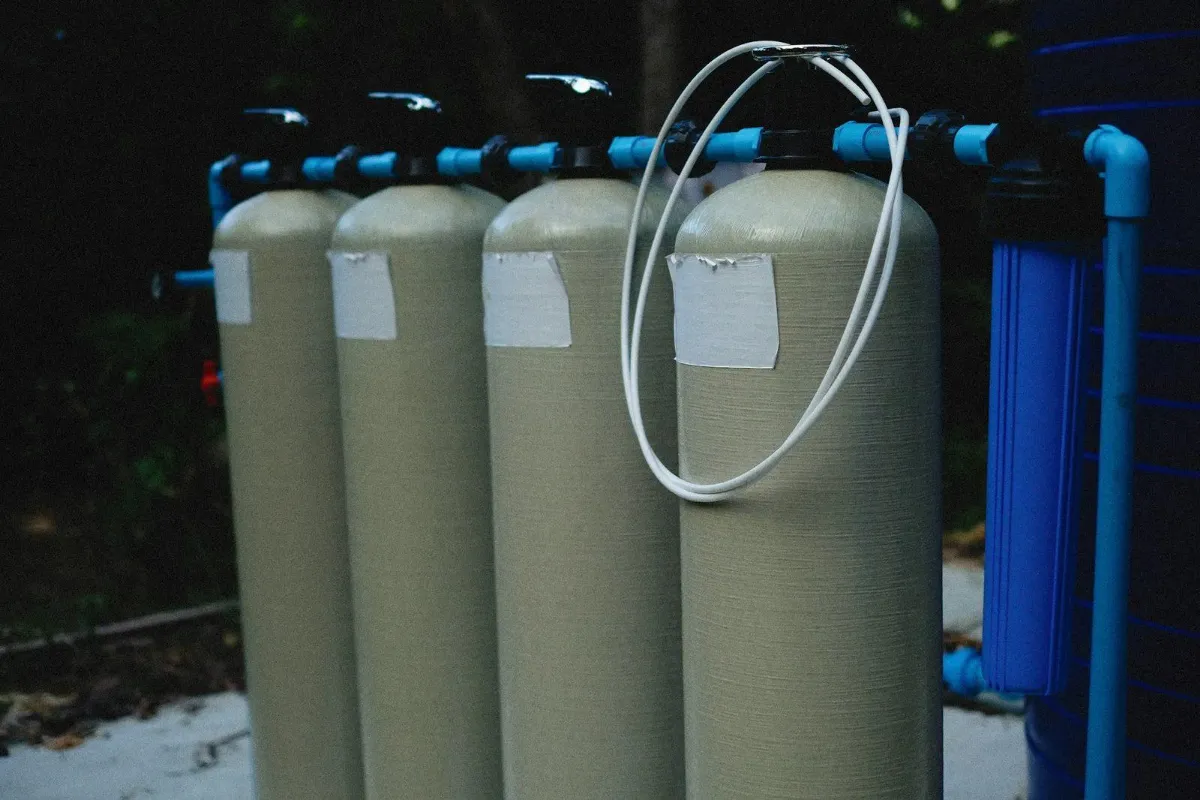
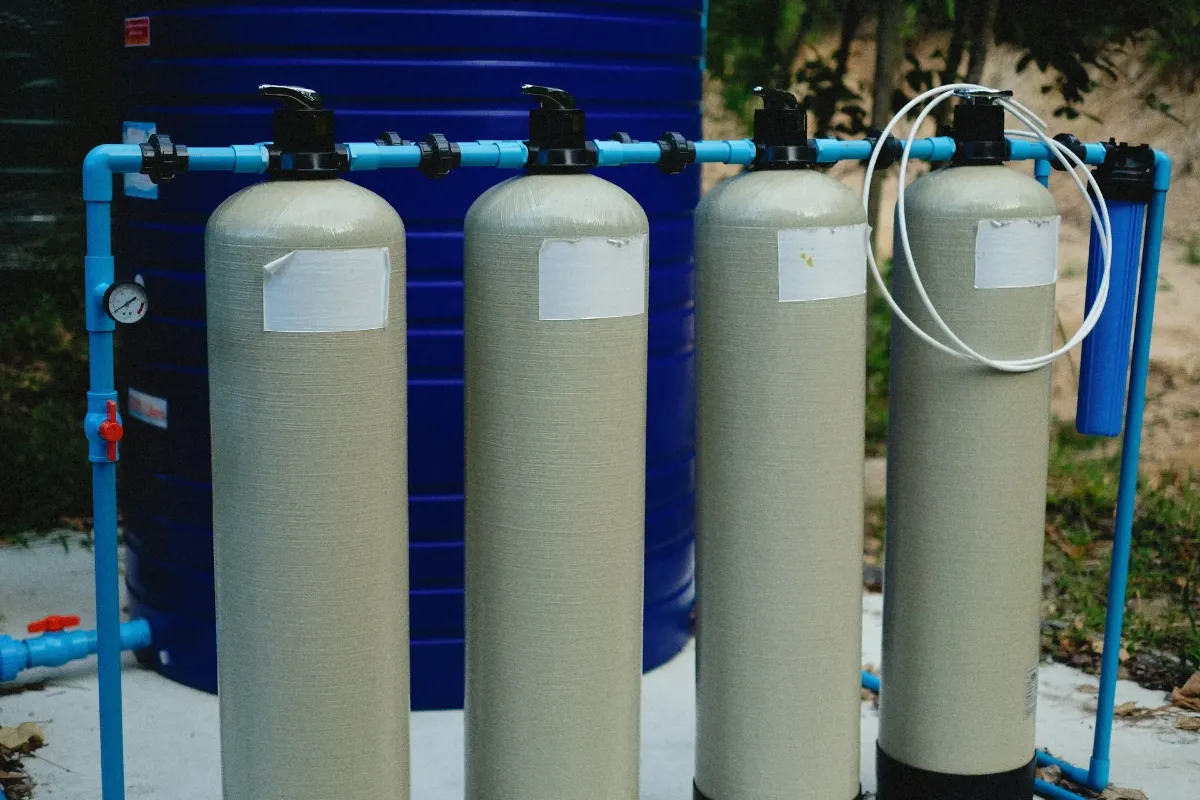
Whole-home filtration may be appropriate when water contains sediment or other substances that a suitable filtration system is designed to reduce.
For example, certain well water supplies may contain particles that require sediment filtration before water enters other treatment equipment.
Municipal water users may be interested in filters designed to reduce chlorine taste or odor.
However, no single filter removes every contaminant. Homeowners should confirm the system's certifications and performance claims for the specific substances they want to address.
What About Reverse Osmosis Systems?
Reverse osmosis systems are commonly installed at a specific point of use, such as a kitchen sink, to treat drinking and cooking water.
Depending on the system, reverse osmosis can reduce a range of dissolved substances.
A whole-home water softener and an under-sink reverse osmosis unit may serve complementary purposes.
However, reverse osmosis is not generally a direct replacement for a whole-home softener when the primary objective is reducing scale throughout household plumbing.
What Should You Consider Before Installing a Water Softener?
Installation requirements vary depending on the home's plumbing layout, available space, water pressure, and the selected equipment.
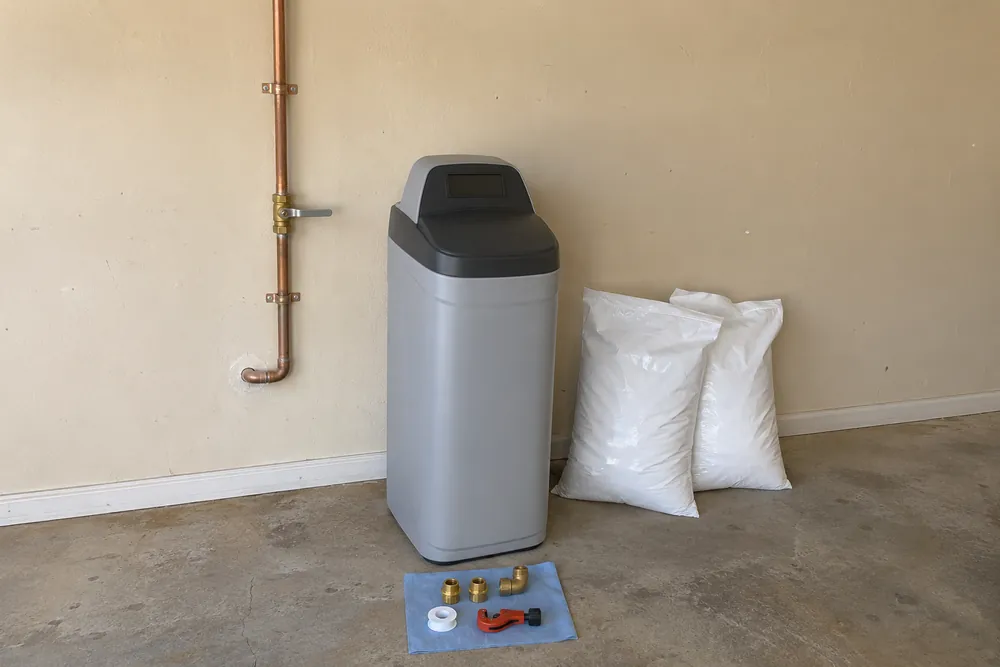
A water softener is generally installed where it can treat the intended household water supply before water reaches the relevant fixtures.
However, outdoor irrigation connections and other lines may be excluded from softening when appropriate.
Where Should the Softener Be Installed?
The installation location should provide access to the main water line, suitable drainage, and any electrical supply required by the equipment.
The unit should also be positioned where homeowners or technicians can access it for maintenance and salt refilling.
Environmental conditions matter as well. Equipment installed in garages or outdoor enclosures may require protection from freezing temperatures, excessive heat, or direct weather exposure.
A professional installer can evaluate these requirements and determine a suitable location.
Why Is Professional Installation Important?
Improper installation can create leaks, drainage problems, pressure restrictions, or equipment performance issues.
A licensed plumbing professional can evaluate the water supply, confirm connection requirements, and install the system according to applicable plumbing standards.
Professional installation also provides an opportunity to explain system settings, regeneration procedures, and maintenance requirements.
Homeowners should ask for clear information about equipment warranties, installation costs, and ongoing service needs before approving the work.
How Do You Maintain a Water Softener?
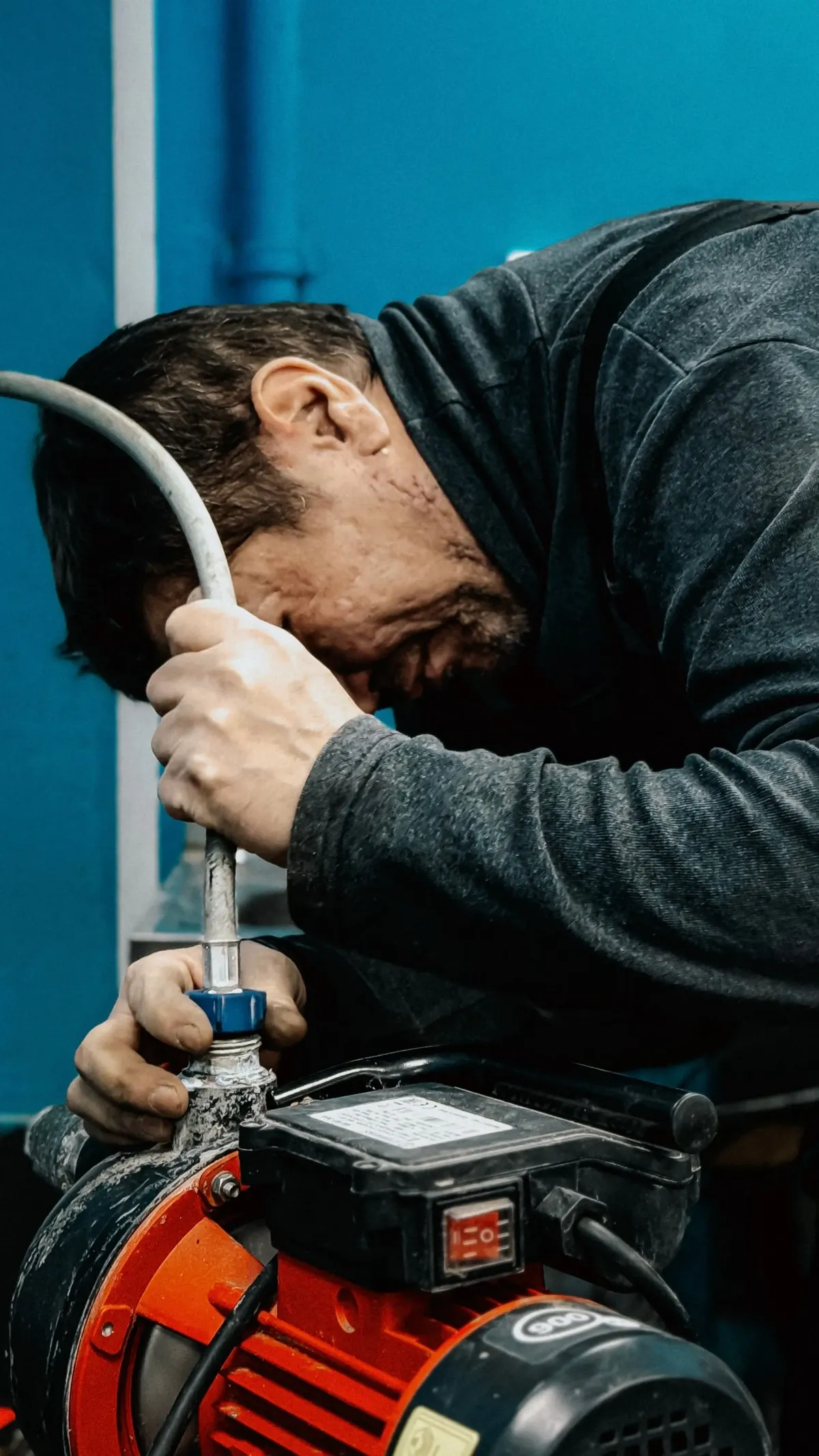
Routine maintenance helps a water softener continue operating as intended.
Maintenance requirements depend on the equipment, water chemistry, household usage, and manufacturer recommendations.
Ignoring maintenance may reduce softening performance or allow problems to develop unnoticed.
How Often Should You Check Salt Levels?
Salt-based systems require an adequate supply of regeneration salt.
Homeowners should inspect the brine tank periodically and replenish salt according to the manufacturer's instructions.
The frequency depends on household water use, hardness levels, and regeneration settings.
It is also important to watch for salt bridging or other conditions that may interfere with regeneration.
When Should You Schedule Professional Service?
Professional service may be appropriate when the water begins showing signs of hardness again, the system uses an unusual amount of salt, or regeneration cycles do not operate correctly.
Technicians may inspect valves, settings, resin condition, and other components to identify problems.
Periodic water testing can also help confirm whether the softener is reducing hardness as expected.
Not every performance issue requires replacement. Some problems can be corrected through adjustments, cleaning, or component repairs.
Water Softener Service From Bergheim Plumbing in Spring Branch
Bergheim Plumbing is a family-owned plumbing company established in 1998 and based in Spring Branch, Texas.
The company serves Hill Country communities including Boerne, Bulverde, Kerrville, New Braunfels, and surrounding areas.
For homeowners considering a water softener, understanding the property's water quality and household requirements is essential before selecting equipment.
Bergheim Plumbing provides water softener installation, service, and repair, helping homeowners address hard water concerns and maintain their plumbing systems.
Homeowners can contact the company to discuss water softener options, installation requirements, and ongoing maintenance.
Conclusion
Choosing the right water softener for a Texas Hill Country home begins with testing the water rather than selecting equipment based on brand names or advertised capacity alone.
Water hardness, household consumption, flow requirements, and additional water quality concerns all influence which system will work best.
Conventional salt-based softeners can remove hardness minerals, while salt-free conditioners and filtration systems serve different purposes. Understanding these differences helps homeowners avoid purchasing equipment that does not address their needs.
For homeowners in Spring Branch, Boerne, Bulverde, Kerrville, and surrounding communities, Bergheim Plumbing provides water softener installation, maintenance, and repair services to help manage hard water and support long-term plumbing performance.
Frequently asked questions
Is Hill Country water hard enough to need a water softener?
Many Hill Country water sources contain calcium and magnesium associated with local geology. However, hardness varies between municipal supplies and private wells. Testing is the most reliable way to determine the actual hardness level. A softener may be useful when mineral deposits, scale buildup, or reduced soap performance are persistent concerns.
What is the best water softener for a family of four?
The appropriate system depends on measured hardness, daily water use, peak flow requirements, and regeneration settings. A family of four does not automatically need a specific grain-capacity model. A professional sizing assessment can help identify equipment that balances treatment performance, salt efficiency, and household demand.
Do salt-free water softeners remove hardness minerals?
Most salt-free conditioners do not remove calcium and magnesium. Instead, certain systems are designed to influence scale formation. Conventional ion-exchange softeners remove hardness minerals and can produce measurable reductions in water hardness. Homeowners should compare the actual treatment functions before choosing between these technologies.
Can a water softener help protect a water heater?
Reducing hardness minerals can help limit scale formation inside water heaters and other plumbing equipment. Scale accumulation may interfere with heat transfer and affect equipment performance over time. However, a water softener cannot reverse every existing problem or guarantee a particular appliance lifespan. Routine water heater maintenance remains important.
How long does a water softener last?
A water softener's service life depends on equipment quality, water chemistry, usage, maintenance, and environmental conditions. Some systems operate for many years with appropriate care, while individual components may require repair or replacement sooner. Regular maintenance and timely repairs can help preserve performance.
Should I test my water again after installation?
Yes. Testing treated water after installation helps confirm that the system is reducing hardness as intended. Periodic testing may also reveal changes in water quality or equipment performance. Homeowners should follow manufacturer recommendations and arrange additional testing when mineral buildup or other hard water symptoms return.

About the author
David Engel, owner, Bergheim Plumbing
David Engel started Bergheim Plumbing in Spring Branch in 1998 and holds Texas master plumber license M-36766. His son Colton works the trucks with him.