
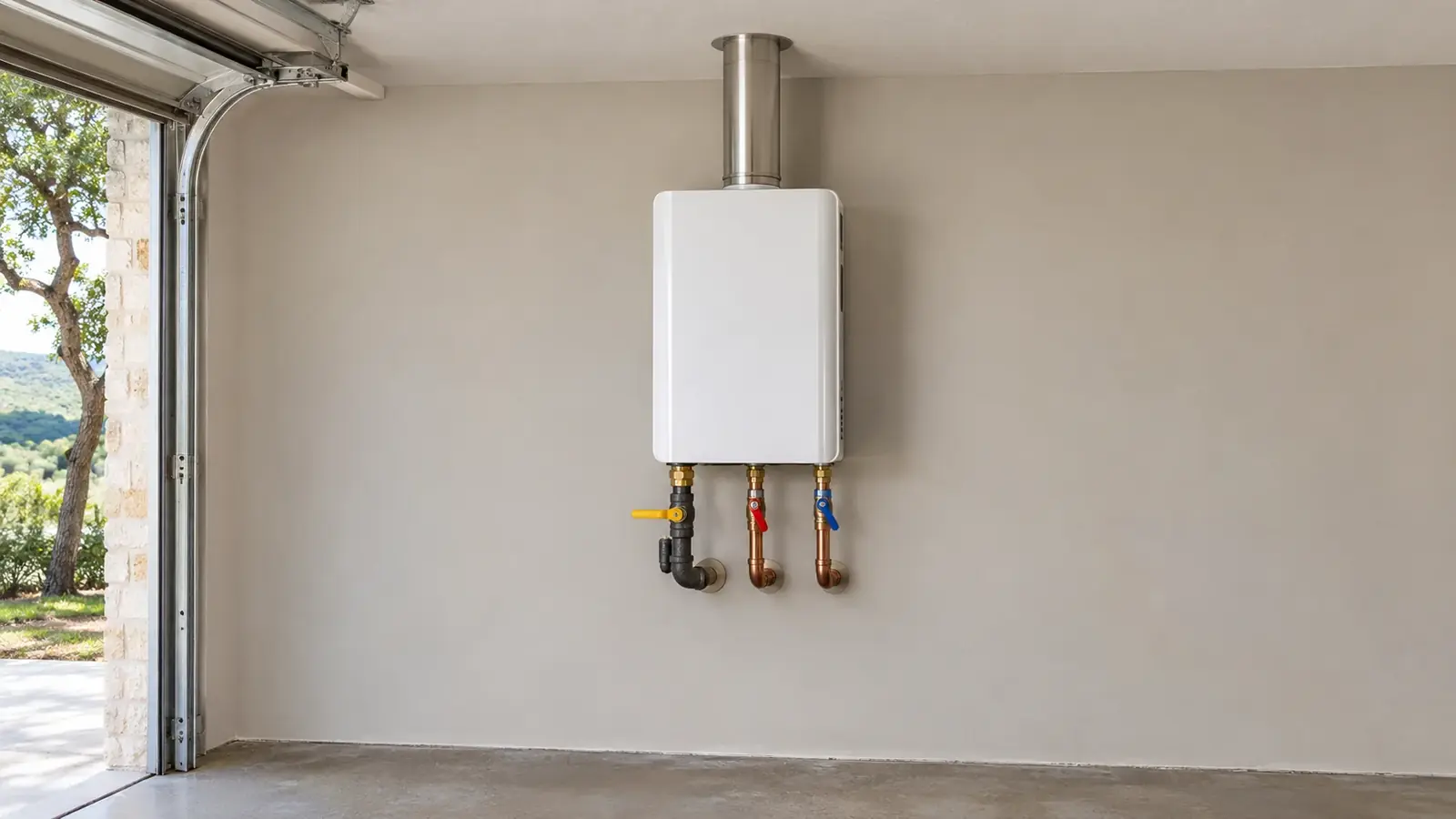
Tankless Water Heater Installation Across the Hill Country
Tankless water heater installation across the Hill Country swaps an old tank for a tankless unit sized to the flow and fixtures in the house and set to the local plumbing code. Bergheim Plumbing, family owned since 1998, has handled tankless swaps for homes across the region.
Deciding on a Swap
Signs It Is Time to Go Tankless
An aging tank, hot water that runs out during busy hours, or a house that wants more hot water at once are the reasons homeowners most often look at tankless, and each one changes what the swap needs to solve.
Heater Past Fifteen Years
A tank water heater typically lasts ten to fifteen years before it needs replacing.
Hot Water Runs Out Fast
A tank holds a set amount of hot water. Tankless heats water as it flows, up to its flow limit.
Gas Line Looks Small
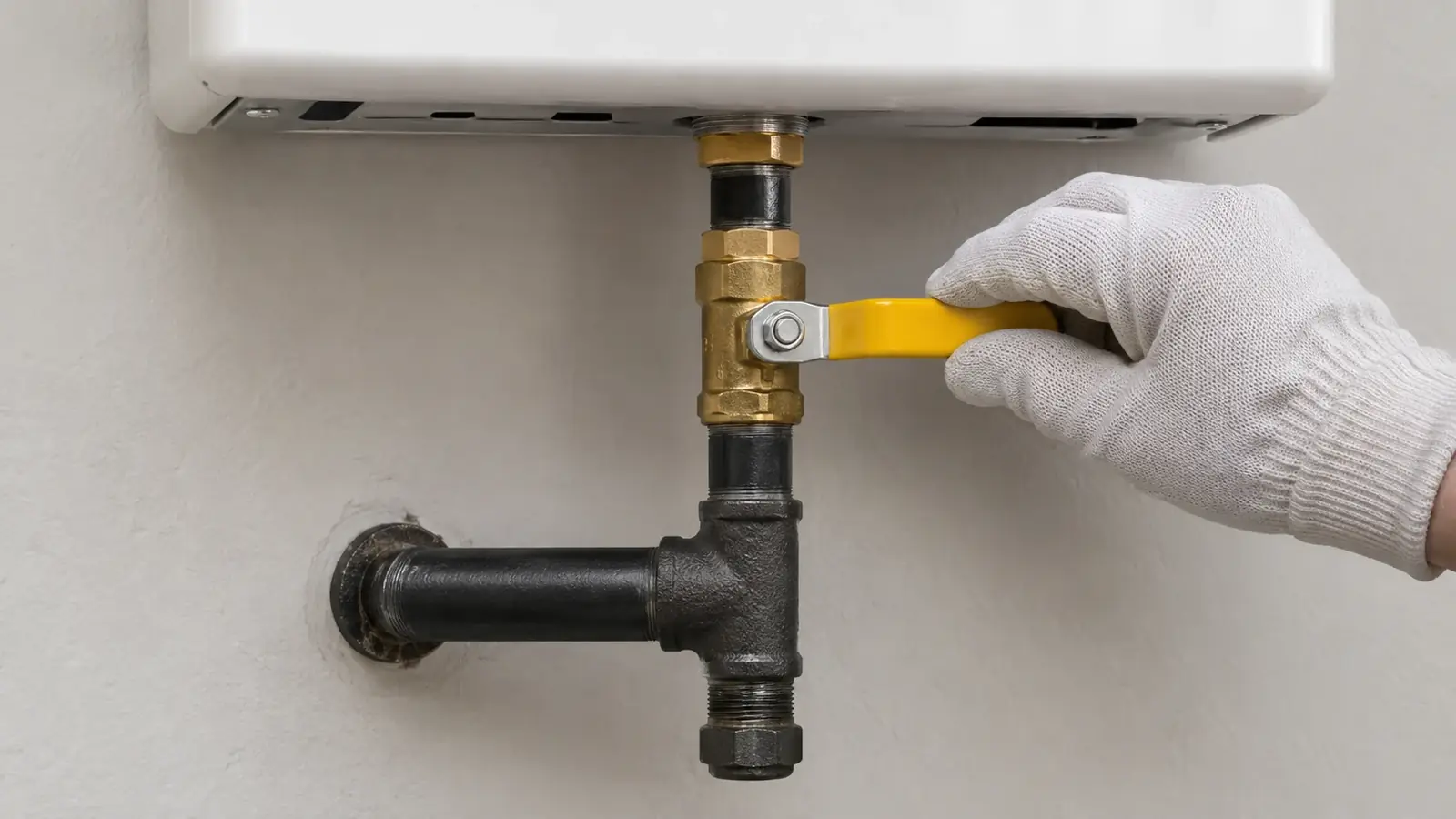
A tankless unit often needs a larger gas supply than the tank it replaces.
Hard Water Scaling It Up
How much scale builds on the heat exchanger depends on how hard the water runs.
Venting Needs a New Path
A tankless unit vents differently than the tank it replaces, often running through a side wall.
Planning an Electric Swap
An electric tankless unit often needs a larger electric service. Ask us if yours fits.
Tank or Tankless
Deciding Whether to Swap to Tankless
A tank swap is usually a straight swap in the same spot, with the same fuel and vent. Going tankless adds more questions: how many people and showers the house runs at once, whether gas or electric fits, and how hard the water runs.
- How many people live in the house and how many showers or fixtures run hot water at once.
- Whether the house runs on gas or electric, and whether that supply can carry a tankless unit.
- How much space the new unit needs, and whether the vent path has to change.
- How hard the water runs, since that changes the upkeep on the heat exchanger.
Get the Size Right
Sizing a Tankless Heater by Flow and Fixtures
Size a tankless heater by the flow rate and the temperature rise your house needs, instead of the old tank's gallons. List the fixtures you plan to run at once and add up how much hot water they use together.
On energy, the Department of Energy notes the efficiency gain over a tank is larger in a house that uses less hot water in a day than in one that uses a lot. That is a separate question from flow, which decides whether the unit keeps up when several showers run at once.
Gas or Electric
Gas Tankless and Electric Tankless Compare
Gas fired tankless units typically reach higher flow rates than electric ones, the Department of Energy notes. Electric units skip the gas line and venting, but often need more electrical capacity than a home's existing panel provides.
Gas Tankless
- How it heats the water
- A gas burner heats the water as it flows through.
- Flow rate
- Often more flow at once than an electric unit.
- What the install needs
- A gas line sized for the burner, and a vent through the wall.
- Upkeep on hard water
- Hard water can scale the heat exchanger over time.
Electric Tankless
- How it heats the water
- An electric element heats the water as it flows through.
- Flow rate
- Often less flow at once than a gas unit.
- What the install needs
- A larger electric service and room for the new unit on the wall.
- Upkeep on hard water
- Hard water can scale an electric unit's exchanger too.
Whether tankless fits depends on the gas or electric supply and the venting path a house already has.
“Honest advice, on time, reliable! I highly recommend Colton and his team!”Moses Salinas Google ReviewView on Google
What a Tankless Swap Includes
What the Installation Itself Includes
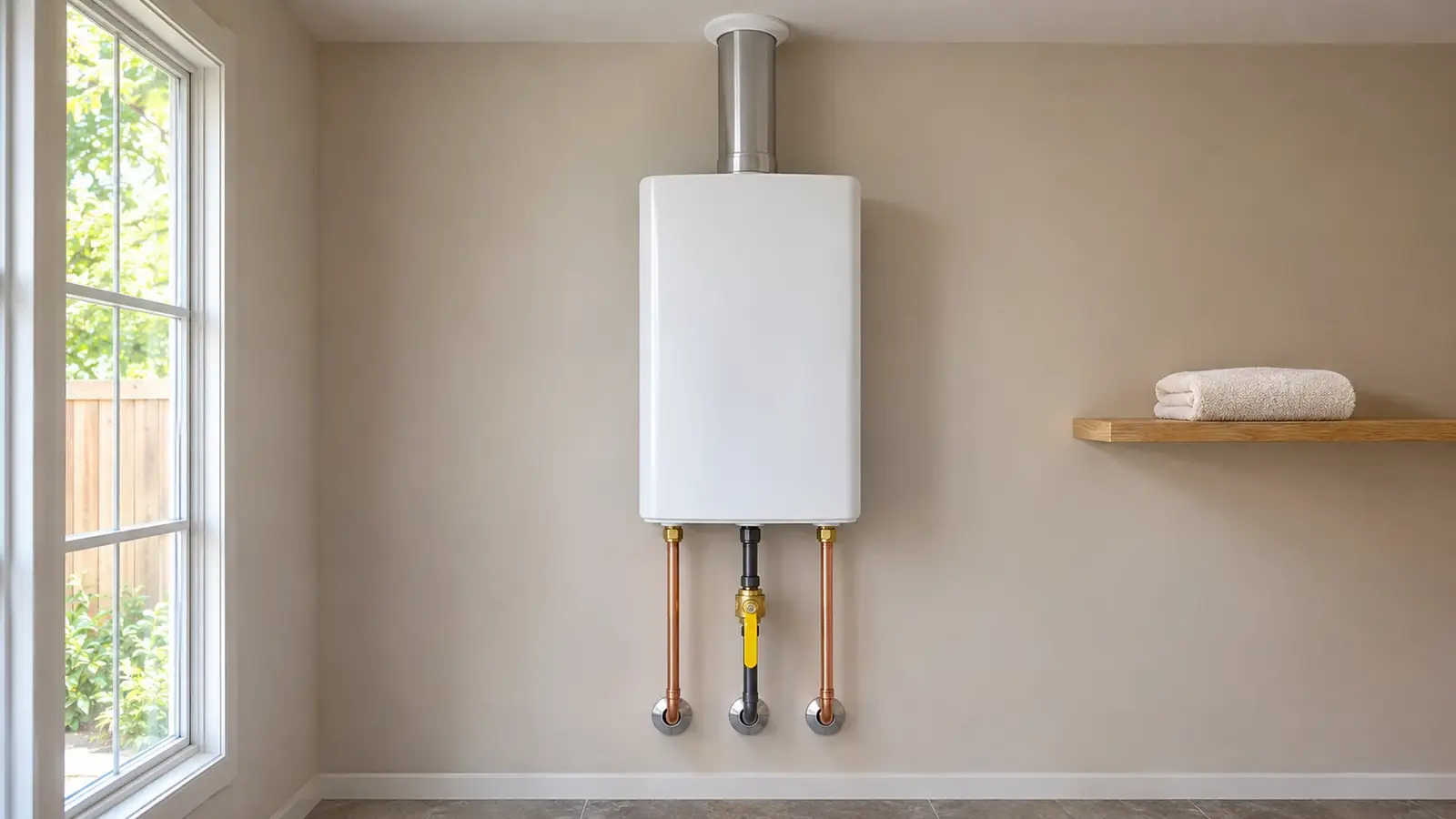
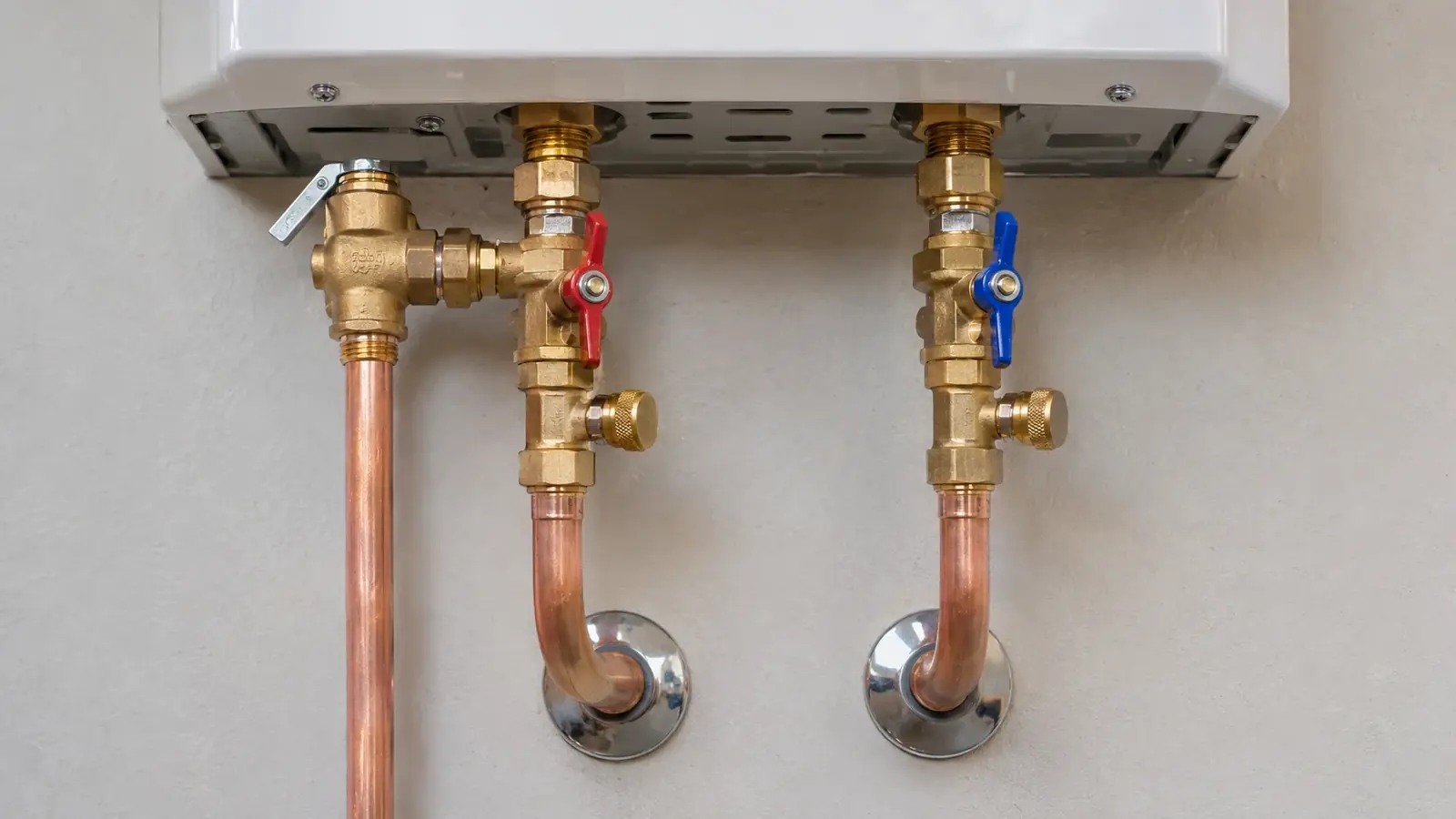
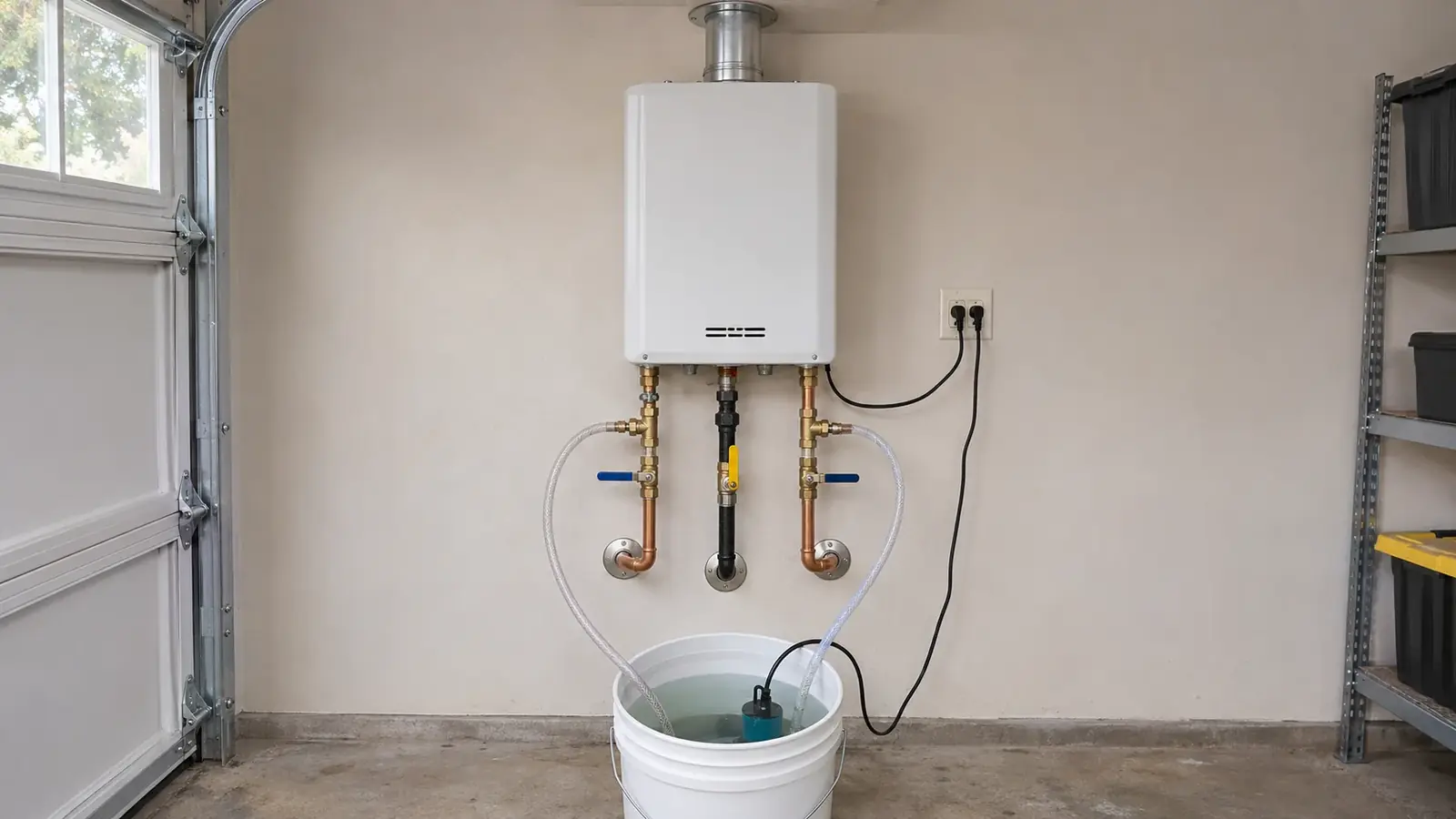
A tankless installation covers the old tank coming out, the new unit mounted on the wall and connected to the water lines, and the gas or electric supply and venting the new heater needs, which often differ from what the old tank used.
- The gas or electric supply the new unit needs.
- The vent run for the unit, through the wall or the roof.
- A service valve on each side of the unit, so it can be flushed without draining the lines.
- A condensate line on a condensing unit, run to a drain.
- The old tank hauled off when we leave.
Hard Water and the Heat Exchanger
How Hard Water Affects a Tankless Unit Here
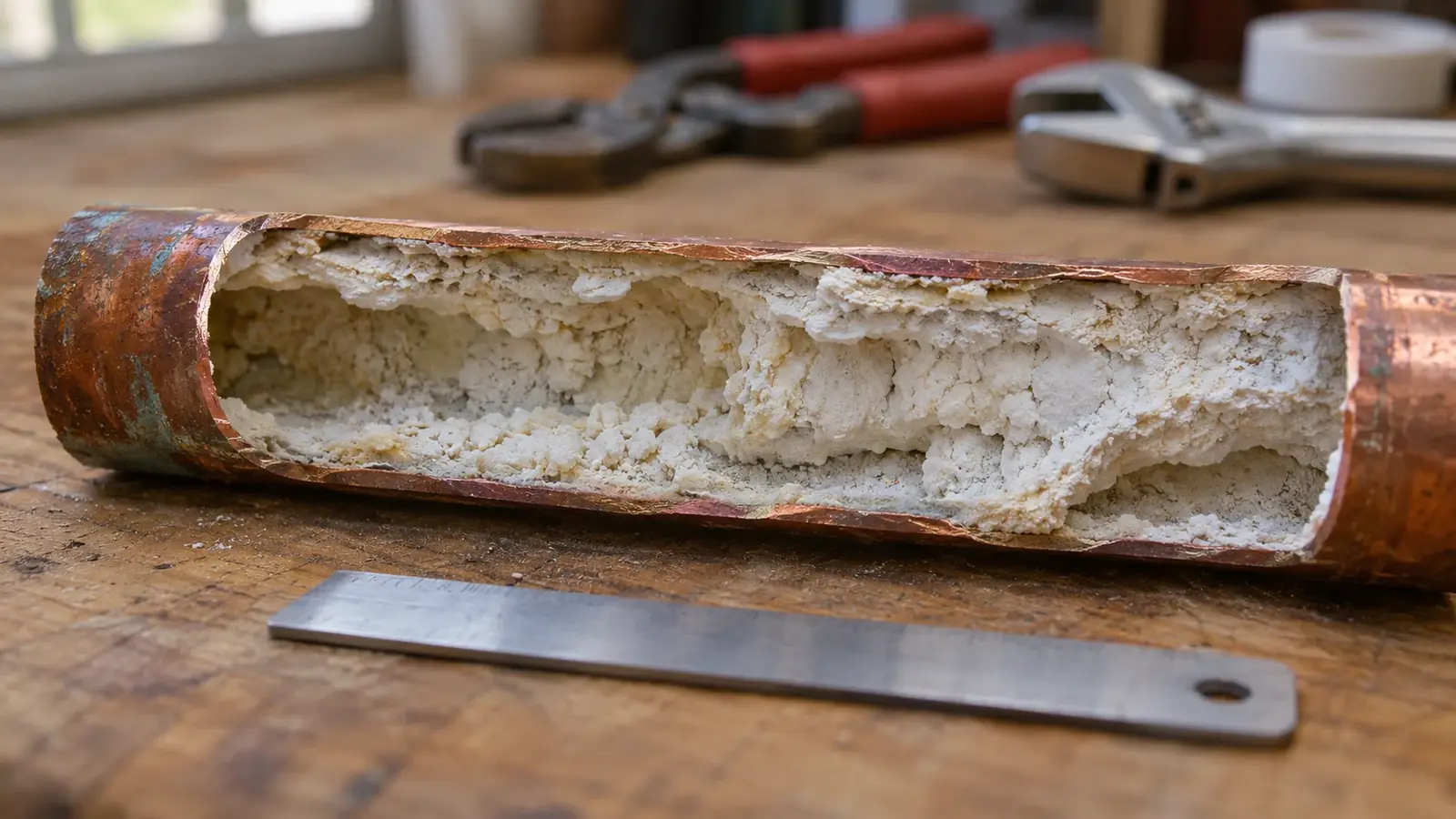
Hill Country groundwater often runs hard. The Texas Water Development Board describes groundwater in the outcrop of the Trinity Aquifer, which underlies much of the Hill Country, as fresh but very hard. Hard water can leave scale on a tankless unit's heat exchanger, and treating the water can help limit that buildup.
How often a unit needs descaling follows the water's hardness and the manufacturer's guidance for that model, not a fixed schedule.
How a Tankless Swap Goes
Steps for a Tankless Water Heater Swap
A tankless swap is planned before it is installed. The visit settles what the heater runs on, how much hot water the house uses at once and where the unit can mount, so the plan you hear covers the whole job.
Tell Us About the Heater You Have
Say what the current heater runs on and what you want from a swap. We start the sizing conversation then.
Look at the Supply and the Vent
Whether the gas or electric supply and the vent path can carry a tankless unit is settled first.
Size It to the Flow You Need
The unit's flow is matched to the fixtures the house runs at the same time.
Hear the Plan Before We Start
One answer upfront, covering whether tank or tankless fits best for the house.
Install the New Heater
The old tank comes out and the new unit goes in, vented and connected to the water lines.
Where We Do This Work
Tankless Water Heater Installation by Town
We do tankless water heater installation in every town below, out of our Spring Branch shop.
From the Blog
Guides on This
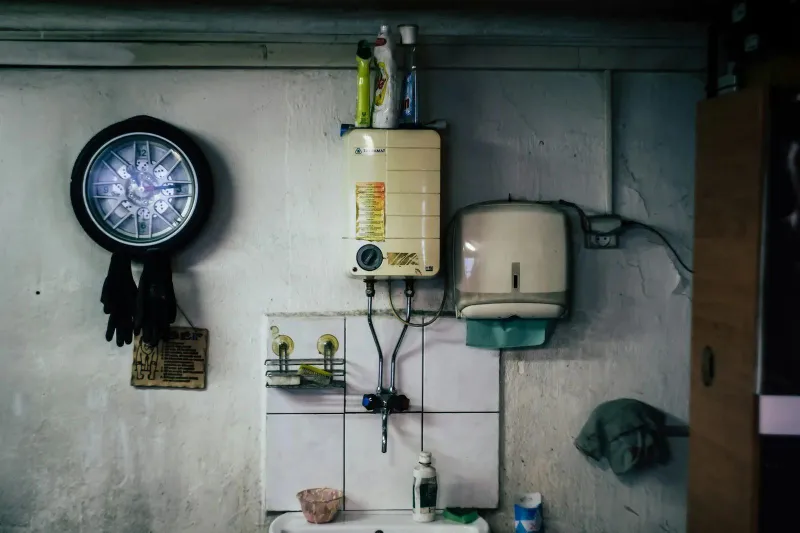
Converting to a Tankless Water Heater: What to Know
Thinking about converting to a tankless water heater?Read the Guide
Water Heater Size Guide: What Size Your Home Needs
Find the water heater size your home needs from household demand, first-hour rating, and tankless flow.Read the Guide
How Long Does a Water Heater Last? Hill Country Guide
How long a water heater lasts in Hill Country hard water, and how to choose between repair, replacement or a tankless unit for your home.Read the GuideSet up a visit to talk through tank or tankless for the house.
Straight Answers
What Callers Ask About Going Tankless
Before a tankless swap, homeowners usually want to know what it takes to switch, whether the hot water will keep up with the house, and how much upkeep hard Hill Country water adds.
Is My House a Good Fit for a Gas Tankless Swap?
Often yes, if the gas line and venting can be sized for it. A look at the house settles it, and we tell you straight if a tank still fits better than tankless.
What Does an Electric Tankless Swap Need?
Often a larger electric service than a tank heater uses. Ask us on the call whether an electric unit fits your house.
Will a Tankless Heater Keep Up with a Full House?
Usually, if it is sized to the fixtures you run at once. Running a shower and the dishwasher together can push a tankless unit to its limit, so we size for your busiest hour.
Does Hard Water Hurt a Tankless Heater?
It can. Hard water can leave scale on the heat exchanger, and makers' manuals can call for treated water or more frequent flushing where the water is hard. How often depends on the hardness and the model.
What Size Tankless Heater Does My House Need?
It depends on the hot water the house uses at once: the fixtures running together and how much the water has to be heated. That flow, in gallons a minute, is a separate question from efficiency, which is how much energy the unit uses over a year.
Other Services
Other Plumbing We Fix Around Here
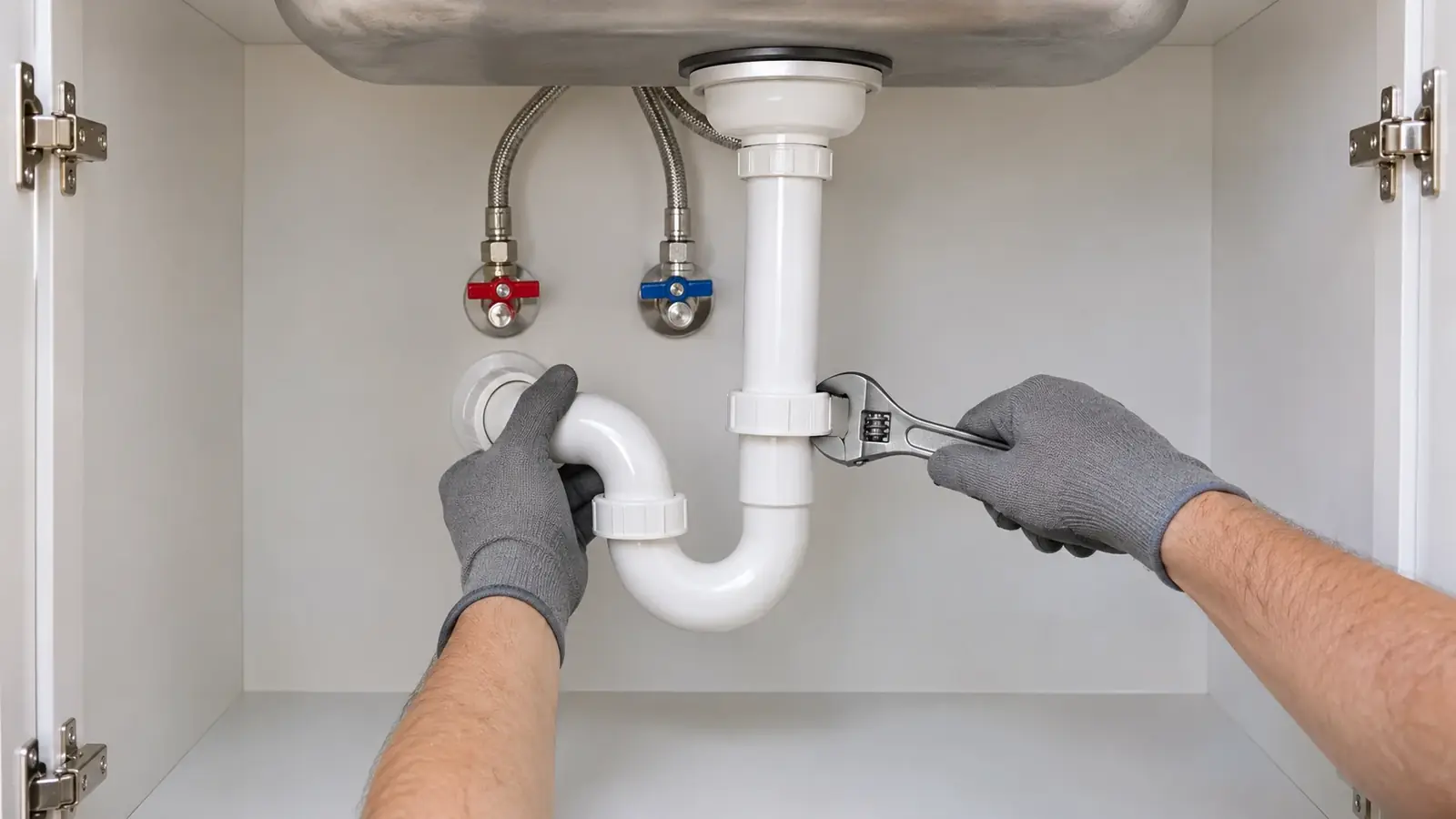
Bergheim Plumbing also handles the related plumbing jobs below.
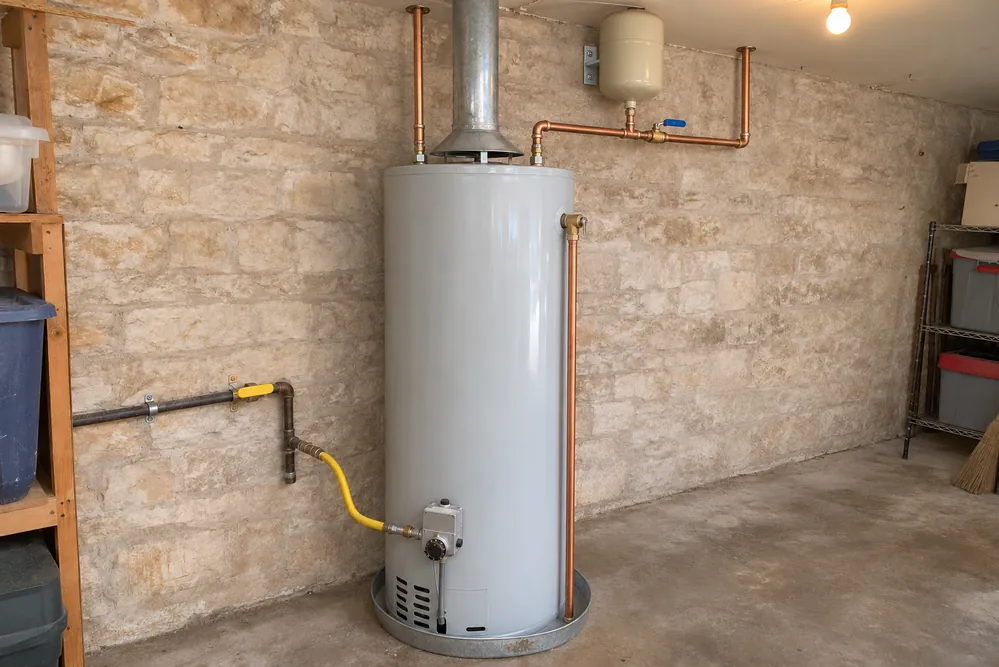 Water Heater Repair and ReplacementRepair or replace: gas, electric or tankless, whichever one fits the house.Learn More
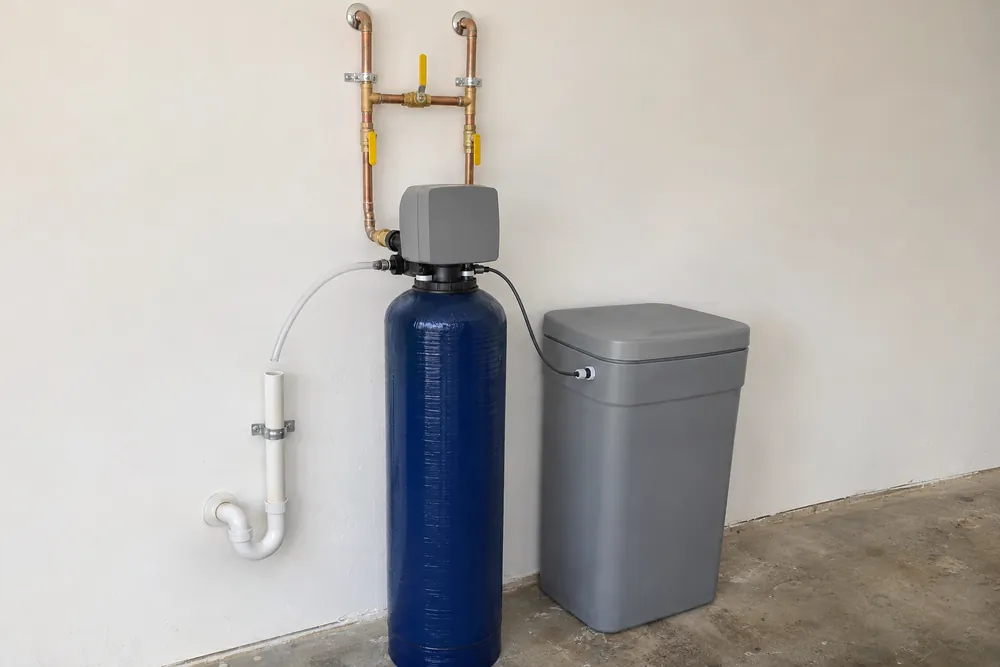 Water Softener Installation and ServiceHill Country water is hard on pipes. We install and service softeners.Learn More
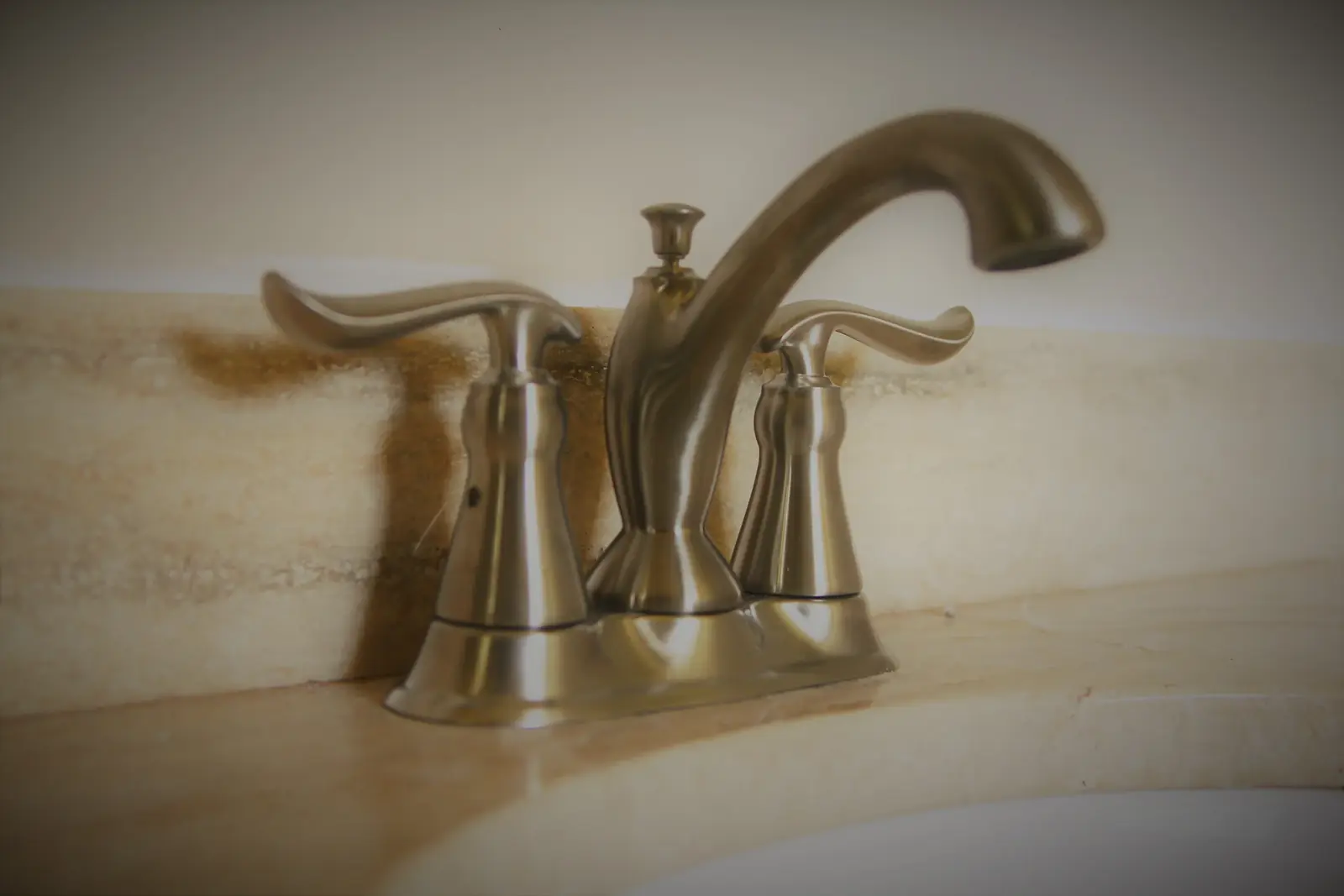 Faucet Repair and Fixture ReplacementDrips, low pressure and replacements, in the kitchen and in the bathroom.Learn More
 Bathroom Remodels and Whole-Home RepipesBathroom and kitchen plumbing, remodel or repipe, done right the first time.Learn More

Whether tank or tankless fits the house, there is no charge to come out and look at it.
Call 210-264-1432