Quick facts
- A stuck valve, a hard crust of salt inside the brine tank, or a leaking fitting can often be fixed.
- The new unit is sized based on your hardness test and the number of people in your home.
- If the old system has a working bypass valve, water can be routed around it so the rest of the house keeps running.
- The air gap keeps drain water from flowing back into your drinking water.
- When the salt runs out, the softener stops removing hardness.
A water softener can work quietly in the background for years. Then one day, the spots on your dishes return, the faucets start to crust over, and the soap stops lathering again.
When an older softener stops doing its job, replacing it is often the most practical fix. Knowing what the water softener replacement process involves helps you plan ahead and avoid surprises.
For homeowners in the Texas Hill Country, where water is naturally very hard, a working softener protects plumbing fixtures, appliances, and water heaters from constant mineral buildup. The Texas Water Development Board describes water from the Trinity Aquifer as fresh but very hard, and most homes in the area feel the difference when a softener stops working.
This guide covers the signs that a softener needs replacing, what happens before and during the work, and how to keep the new system running well.
How Do You Know Your Water Softener Needs Replacing?
Softeners rarely fail all at once. Most homeowners notice the hard water signs slowly coming back.
What Signs Point to a Failing Softener?
Watch for these common warning signs:
- Spots and film return: Glasses and dishes come out of the dishwasher cloudy again.
- Crust on fixtures: White scale starts forming on faucets and showerheads.
- Poor lathering: Soap and shampoo stop foaming like they did before.
- Salt is not being used: The salt level stays the same for weeks, which can mean the unit is not regenerating.
- Leaks around the unit: Water collects near the softener, valve, or drain line.
Some of these problems can be repaired. Others mean the softener has reached the end of its useful life.
Why Do Hard Water Signs Come Back Slowly?
A softener that is starting to fail usually still removes some hardness. It just removes less than it should.
That is why the changes can be easy to miss at first. A little more film on the shower glass or a few more spots on dishes may not seem like much until the scale is back on every fixture.
Hard water also affects parts of the home you cannot see, like the inside of the water heater and the pipes behind the walls. Catching a failing softener early limits how much new scale builds up in those places.
Should You Repair or Replace the Softener?
Not every problem calls for a new unit. A stuck valve, a hard crust of salt inside the brine tank, or a leaking fitting can often be fixed.
Bergheim Plumbing starts by looking at the softener and finding the cause. If it can be repaired, you will hear that first. If it cannot be fixed, the team will tell you straight and price a new one.
What Happens Before the Replacement Begins?
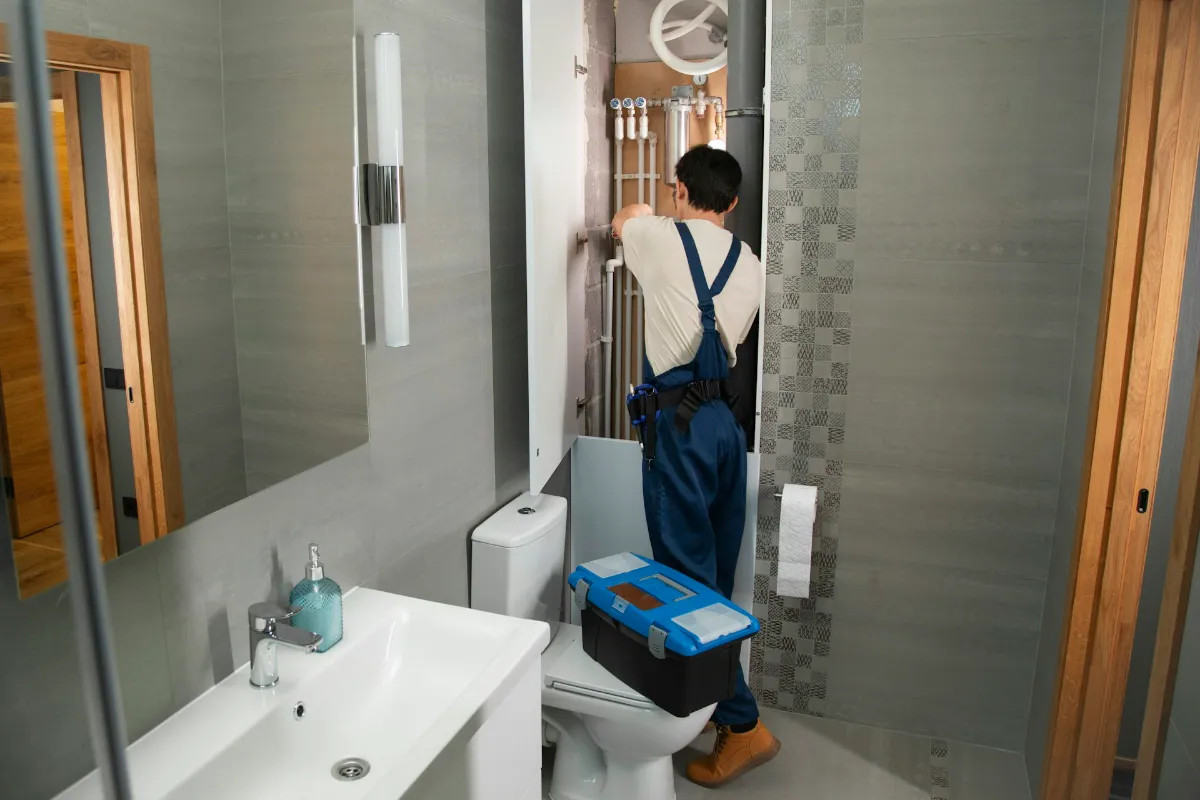
A good replacement starts with understanding your water and your household, not just matching the size of the old unit.
Why Is a New Water Test Important?
Your water may have changed since the original softener was installed, and your household may have grown.
Bergheim Plumbing tests the water at your tap and checks where the water line enters the house. There is no charge to come out for the test.
Hill Country water is very hard. SAWS reports about 15 to 20 grains per gallon, and very hard water past 30 grains per gallon needs a softener set up specifically for that level.
How Is the New Softener Sized?
The new unit is sized based on your hardness test and the number of people in your home. A softener that is too small will run out of capacity quickly, while one that is too large costs more than it needs to.
After the test, you receive one size, one price, and the reasoning behind the recommendation. Nothing moves forward until you approve it.
What Affects the Cost of a Replacement?
The price of a new softener depends mostly on its size. Size, in turn, depends on how hard your water is and how many people live in the home.
Other factors include the condition of the existing connections, the space around the unit, and whether a filter is being added at the same time.
Because the price is given before any work starts, you know the full cost up front and can decide with no pressure.
How Is the Old Water Softener Removed?
Once the plan is approved, the team schedules a day for the replacement.
Shutting Off and Disconnecting the Old Unit
The technician starts by stopping the flow of water to the softener. If the old system has a working bypass valve, water can be routed around it so the rest of the house keeps running.
The inlet, outlet, and drain connections are then disconnected. Softener tanks hold resin and water, so they can be heavy and awkward to move.
Checking the Existing Connections
With the old unit out of the way, the technician looks at the pipes, fittings, and valves that will connect the new system.
Worn or outdated parts can cause leaks later, so they are replaced as needed. This is also the time to confirm the drain is suitable for the new softener.
Planning Around Your Water Use
A replacement does not usually leave you without water for long. With a bypass in place, the rest of the house can stay in service while the old unit is removed.
If the existing plumbing needs more work than expected, the technician will explain what was found and get your approval before going further.
How Is the New Water Softener Installed?
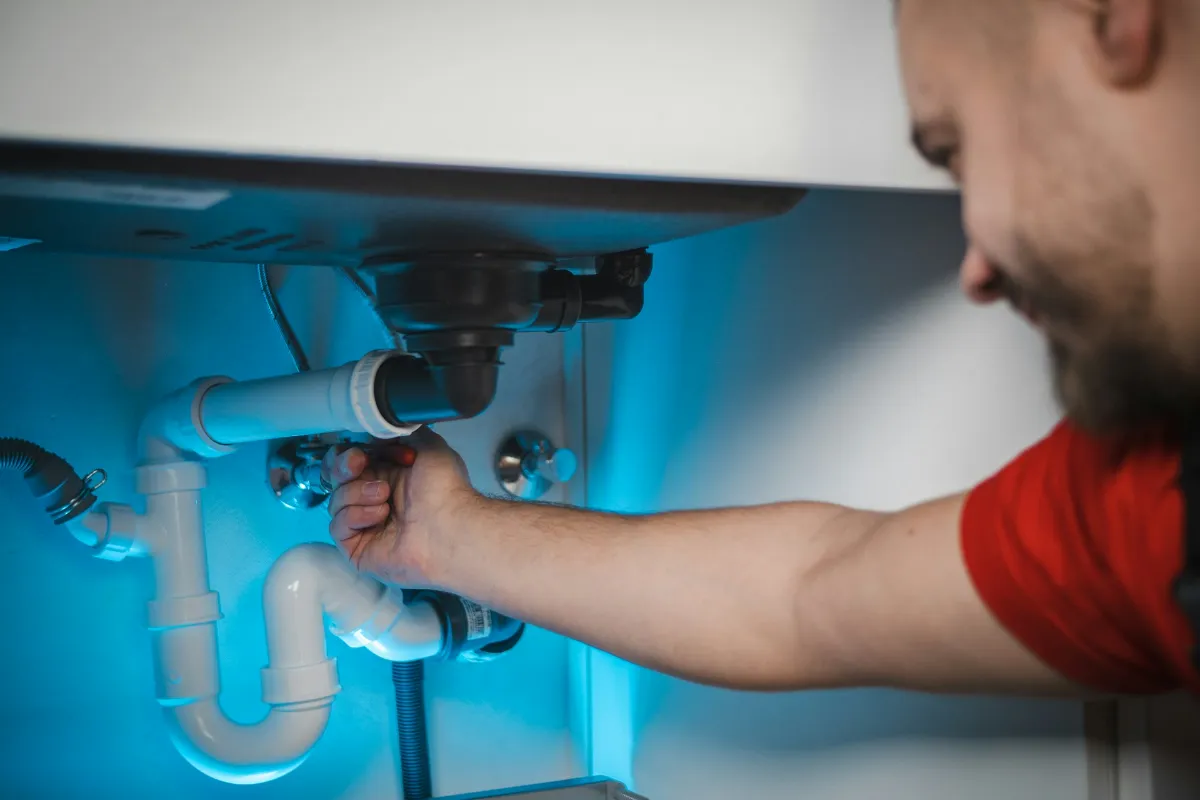
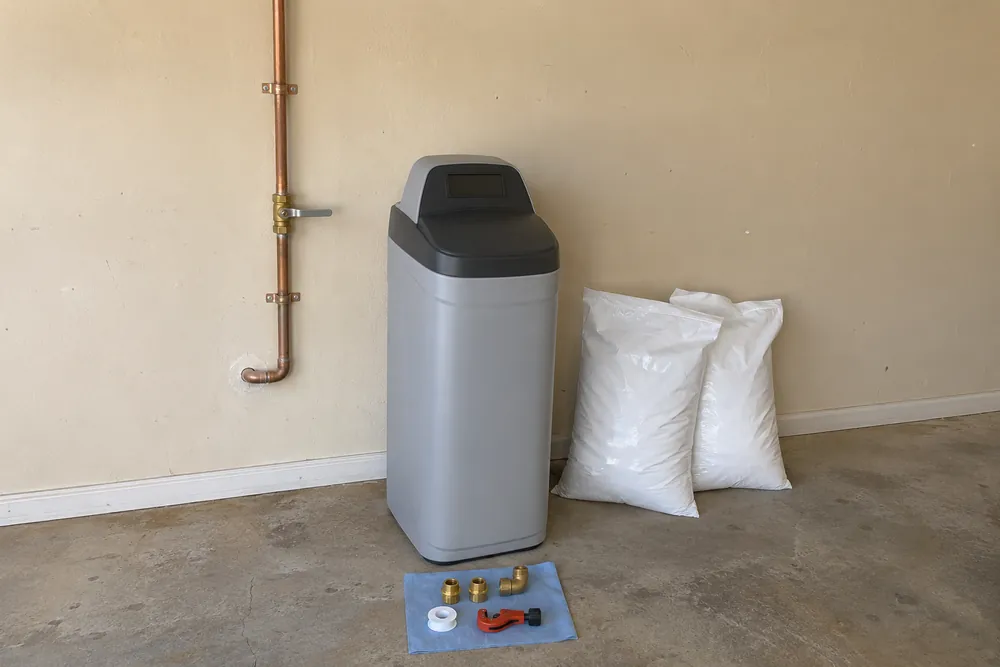
The team brings the new unit, salt, and fittings on installation day, so everything needed is on hand.
Plumbing In the New System
The new softener is set in place and plumbed into the main water line. Every water softener installation from Bergheim Plumbing includes a bypass valve.
The bypass lets you send water around the softener when it needs service, without shutting off water to the whole house.
Connecting the Drain Line
Softeners use a drain line to flush out water during regeneration. The drain line ends at an air gap, the way the plumbing code asks.
The air gap keeps drain water from flowing back into your drinking water. It is a small detail that matters for safety and code compliance.
Adding a Filter at the Same Time
A softener removes the minerals that cause scale, but it does not change how the water tastes or smells.
If your water has a taste, odor, or grit, a filter can be added during the same visit. Filters can go under a sink or on the main line, and their cartridges are replaced on a schedule.
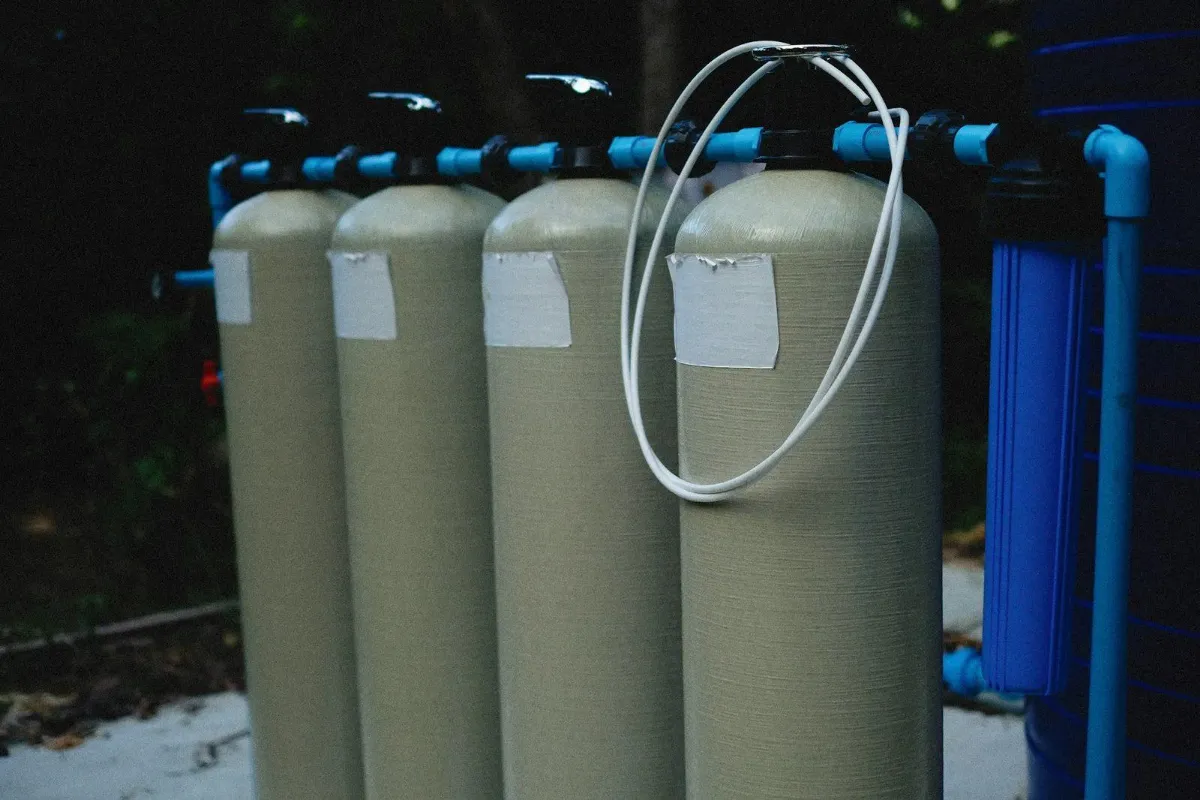
Many Hill Country homes benefit from both a softener and a filter, especially homes on private wells.
How Is the New System Tested?
Installing the unit is only part of the job. The system needs to be checked before you rely on it.
Running the System and Checking for Leaks
The technician turns the water back on and runs the softener. Every joint is checked with water on to make sure nothing leaks.
The settings are then adjusted for your water hardness so the unit regenerates when it should.
Walking You Through the New Softener
Before leaving, the technician shows you the bypass valve, where the salt goes, and how the settings work.
Knowing these basics makes it easier to keep the system working and spot a problem early.
What Should You Do After the Replacement?
A new softener needs very little from you, but a few habits help it last.
Keep Salt in the Tank
The most important job for homeowners is keeping salt in the brine tank. When the salt runs out, the softener stops removing hardness.
Check the salt level regularly and look for a hard crust forming at the top. A crust can stop the unit from regenerating properly.
Watch for Changes in Your Water
If spots, scale, or poor lathering return, the softener may need attention. Leaks around the unit or drain line should also be looked at quickly, along with any other plumbing repairs your home may need.
Soft water also helps your water heater. A study for the water treatment industry found that gas water heaters running on softened water built up almost no scale.
When Should You Call for Service?
Call for service if you notice water pooling near the softener, the salt level never seems to change, or hard water signs return.
Bergheim Plumbing offers after-hours emergency service for leaks that cannot wait, and there is no charge to come out and look at the problem.
Schedule Your Water Softener Replacement With Bergheim Plumbing
An aging water softener lets hard water back into your home, along with the spots, scale, and wear that come with it.
A smooth water softener replacement process starts with a free water test, a unit sized for your home, and an installation done to code.
Bergheim Plumbing is family-owned, has served the Hill Country since 1998, and is led by a licensed Texas Master Plumber. The team serves Spring Branch, Bergheim, Boerne, Bulverde, New Braunfels, Kerrville, Leon Springs, and North San Antonio.
Call Bergheim Plumbing at 210-264-1432 or schedule a free water test to replace your water softener.
Frequently asked questions
How Long Does the Water Softener Replacement Process Take?
Most replacements are completed in a single visit. The time depends on access to the old unit and whether any pipes or fittings need to be updated.
Can My Old Water Softener Be Repaired Instead?
Sometimes. A stuck valve, salt crust, or leaking fitting can often be fixed. If the unit cannot be repaired, Bergheim Plumbing will tell you and price a new one.
Do I Need a Water Test Before Replacing My Softener?
Yes. A test shows how hard your water is today, so the new softener is sized correctly. Bergheim Plumbing tests the water at your tap at no charge.
Will the Old Softener Be Removed?
Yes. The old unit is disconnected and taken out before the new softener is installed.
Will a New Softener Help My Water Heater?
Yes. Removing calcium and magnesium helps limit scale inside the water heater, which can help it perform better and last longer.
Can a Softener Be Replaced on a Home With a Private Well?
Yes. Many Hill Country homes rely on private wells. A water test at the tap shows how hard the well water is and whether a filter should be added for taste, smell, or grit.
What Does the New Installation Include?
It includes a bypass valve, a drain line ending at an air gap, leak checks with the water on, and a walkthrough of the bypass, salt, and settings.

About the author
David Engel, owner, Bergheim Plumbing
David Engel started Bergheim Plumbing in Spring Branch in 1998 and holds Texas master plumber license M-36766. His son Colton works the trucks with him.