Quick facts
- Traditional storage tanks are commonly described by their gallon capacity, while tankless systems are rated by how much hot water they can produce at a given time.
- The most useful starting point for selecting a water heater is understanding how the household uses hot water throughout the day.
- For a traditional storage water heater, tank capacity is only one part of the decision.
- A tankless water heater's output is commonly expressed in gallons per minute.
- Household demand is the foundation of water heater sizing, but the selected equipment must also be suitable for the home's utilities and available space.
Choosing the right water heater size depends on more than the number of people in a household. Hot water usage, daily routines, and the amount of heated water needed during peak demand all influence which system will work best. A household with several back-to-back showers may have different requirements than one where hot water use is spread throughout the day.
For homeowners wondering, “What size water heater do I need?”, understanding these usage patterns is the first step. In Spring Branch and across the Texas Hill Country, a water heater sized to the home keeps hot water steady without putting in a bigger system than you need.
What Does Water Heater Size Actually Mean?
Water heater size refers to different measurements depending on the equipment type. Traditional storage tanks are commonly described by their gallon capacity, while tankless systems are rated by how much hot water they can produce at a given time.
Understanding these measurements is important because two water heaters with similar specifications may perform differently during periods of high demand.
Storage Tank Capacity
Traditional water heaters store a set volume of heated water for household use. Common residential models are available in several tank sizes, but the amount of water stored does not tell the whole story.
A storage heater also reheats incoming cold water as hot water is used. The speed of that recovery affects how much hot water the household can receive over a given period.
This means two water heaters with the same tank capacity may deliver different amounts of hot water during a busy morning.
Tankless Water Heater Capacity
Tankless water heaters do not depend on a large supply of stored hot water. Instead, they heat water as it moves through the equipment.
Their capacity is generally expressed in gallons per minute (GPM), which describes the rate at which the unit can provide heated water under specified operating conditions.
The important consideration is whether the system can supply enough hot water when multiple fixtures are being used at once.
How Much Hot Water Does Your Household Actually Need?
The most useful starting point for selecting a water heater is understanding how the household uses hot water throughout the day. The number of people living in the home matters, but usage patterns often provide a clearer picture of demand.
A homeowner who understands when and where hot water is used can make a more informed comparison between available equipment.
Consider Your Busiest Hour for Hot Water Use
Most households do not use hot water evenly throughout the day. Demand may increase in the morning when several family members shower before leaving home or in the evening when bathing and household chores occur close together.
This busiest period is particularly important when selecting a storage water heater.
For example, a household with four occupants may have moderate demand when showers are spread throughout the day. The same household could place considerably more demand on its heater if everyone showers within a short period.
Rather than focusing only on the number of residents, homeowners should think about how much hot water is needed during their busiest hour.
Identify Fixtures Used at the Same Time
Simultaneous hot water use is another important consideration.
A household may occasionally operate two showers while someone uses the kitchen sink. Another home may rarely have more than one hot water fixture operating at a time.
These differences affect the capacity required to maintain comfortable water temperatures.
When reviewing household demand, consider showers, bathtubs, sinks, and appliances that actually draw hot water from the home's supply. Some modern appliances heat water internally, so their requirements should not be assumed without checking.
Think About Changes in Household Demand
A water heater should meet current household needs while accounting for reasonably expected changes.
A growing family, additional household members, or frequent overnight guests may increase demand. Changes in bathing habits or the addition of a bathroom can also affect when hot water is needed.
However, choosing significantly more capacity than the household is likely to use is not automatically beneficial.
The goal is to select equipment that accommodates realistic demand rather than planning around every possible combination of water use.
How Do You Choose the Right Storage Tank Water Heater Size?
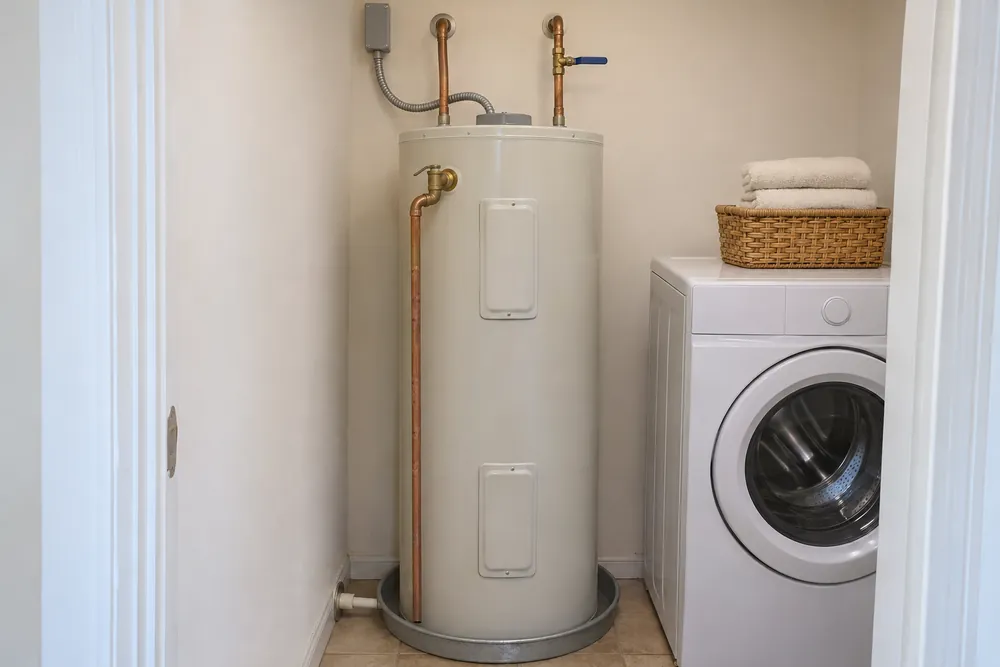
For a traditional storage water heater, tank capacity is only one part of the decision. Homeowners should also consider how much hot water the equipment can deliver during peak use and how quickly it can recover afterward.
These specifications help distinguish between models that may have similar tank sizes but different operating capabilities.
Understanding First-Hour Rating
First-hour rating, commonly abbreviated as FHR, estimates how many gallons of hot water a storage water heater can supply during its first hour of operation, starting with a fully heated tank.
The rating accounts for both the water initially stored in the tank and the equipment's ability to heat additional water.
This is useful because tank capacity alone does not indicate how much hot water will be available during periods of heavy use.
Why Recovery Rate Matters
Recovery rate describes how quickly a water heater can replenish its supply of heated water after hot water has been used.
Different heating technologies and equipment designs have different recovery characteristics.
For example, two storage water heaters may hold the same number of gallons but recover at different rates. The model with greater heating capacity may provide more hot water during a busy hour, even though its storage volume is unchanged.
Homeowners should therefore compare the first-hour ratings of specific models rather than assuming that equal tank capacities mean equal performance.
Matching First-Hour Rating to Peak Demand
A practical sizing approach is to estimate the household's busiest hour of hot water use and compare that demand with the first-hour ratings of available heaters.
For example, if the estimated peak hot water requirement is 65 gallons during one hour, a plumber can evaluate models with first-hour ratings that meet or exceed that demand.
This does not mean the home automatically needs a 65-gallon storage tank. Depending on the equipment's recovery characteristics, a smaller tank may have a suitable first-hour rating.
Actual household hot water demand should be estimated using appropriate fixture-use assumptions, including the portion of mixed water supplied by the heater.
Professional sizing helps establish whether a particular model can meet that demand under the home's expected operating conditions.
How Is a Tankless Water Heater Sized?
Tankless water heaters use a different sizing approach because they do not rely on a large storage tank. Instead, the equipment must be capable of heating water quickly enough to meet the household's simultaneous demand.
Two measurements are especially important: flow rate and the required temperature rise.
Understanding Gallons Per Minute
A tankless water heater's output is commonly expressed in gallons per minute. The appropriate flow capacity depends on how much hot water the household may need at one time.
For example, a home where two showers are regularly used simultaneously places greater demand on a tankless system than one where hot water is typically used at only one fixture.
A plumber can review the fixtures and expected usage patterns to establish an appropriate peak flow requirement.
The selected water heater should be capable of meeting that demand at the required operating temperature.
Why Incoming Water Temperature Matters
The temperature of the incoming water affects how much heating the tankless system must provide. The difference between the incoming water temperature and the desired hot water temperature is called the temperature rise.
When incoming water is colder, the equipment must provide more heat to reach the same outlet temperature. This can reduce the amount of hot water a particular model can deliver per minute.
Incoming water temperatures can vary seasonally and between properties. For Hill Country homeowners, sizing should account for appropriate local winter conditions rather than relying only on warmer-weather assumptions.
Manufacturer performance information should be reviewed at the required temperature rise, not just at the highest advertised flow rate.
Does a Larger Tankless Unit Mean Unlimited Hot Water?
A tankless water heater that is sized right keeps making hot water while demand stays inside its capacity. It also needs enough water and enough gas or electric power.
However, no individual tankless unit has unlimited heating capacity.
If too many fixtures demand hot water simultaneously, the system may be unable to maintain the desired temperature at the requested flow rate.
This is why tankless sizing should consider both simultaneous use and incoming water temperature rather than relying on general claims about endless hot water.
What Other Factors Affect Water Heater Sizing?

Household demand is the foundation of water heater sizing, but the selected equipment must also be suitable for the home's utilities and available space.
These considerations can influence which models are practical, even when several systems appear capable of meeting the required hot water demand.
Gas and Electric Water Heater Differences
Gas and electric storage water heaters can have different heating and recovery characteristics.
A model's fuel type alone does not establish its capacity. Homeowners should compare the actual first-hour ratings and specifications of available equipment.
The existing energy supply also matters. Changing from one heating technology to another may introduce additional requirements that should be evaluated before equipment is selected.
Available Space and Equipment Dimensions
Water heaters come in different dimensions, even when they have similar capacities. The installation location must accommodate the equipment and any applicable clearance, access, ventilation, or other manufacturer requirements.
A larger tank may not fit within an existing utility closet, while another model with an appropriate first-hour rating may offer a more practical alternative. These physical limitations should be considered alongside the household's hot water requirements.
Energy Efficiency and Operating Characteristics
Equipment efficiency is another factor worth reviewing when comparing water heaters.
Larger storage capacity does not automatically mean better performance, and it does not necessarily mean proportionally higher energy use. The equipment's design, insulation, efficiency rating, and operating pattern all influence energy consumption.
Homeowners should compare appropriate efficiency information for the models they are considering while making sure that the selected equipment can meet household demand.
A water heater that is efficient but unable to provide sufficient hot water is not necessarily the right choice for the home.
What Mistakes Should Homeowners Avoid When Choosing a Water Heater Size?
Water heater sizing can become confusing when general rules are treated as exact requirements. Household size charts and product descriptions may provide useful starting points, but they should not replace an assessment of actual demand.
A few common assumptions can lead homeowners toward equipment that does not suit their needs.
Choosing Only by the Number of People in the Home
Household size is relevant, but two families with the same number of occupants may use very different amounts of hot water.
The number and duration of showers, simultaneous fixture use, and daily routines all affect demand. A capacity recommendation based only on how many people live in the house may overlook these differences.
Assuming Bigger Is Always Better
Selecting more capacity than necessary may provide little practical benefit, particularly when the household rarely approaches the equipment's maximum output.
Larger equipment can also have different space requirements and operating characteristics. At the same time, choosing a smaller unit purely to minimize equipment size may create performance problems if it cannot meet peak demand.
The better approach is to compare the household's requirements with the capabilities of specific models.
Comparing Tank and Tankless Systems by the Same Measurement
Tank and tankless water heaters should not be evaluated using identical capacity measurements. For storage tanks, first-hour rating helps establish how much hot water can be delivered during a busy hour.
For tankless systems, simultaneous hot water flow and the required temperature rise are central to the decision.
Understanding this difference makes it easier to compare equipment without relying on misleading gallon-capacity comparisons.
How Can a Plumber Help Determine the Right Water Heater Size?
Water heater sizing involves combining household usage information with actual equipment specifications. A plumber can help evaluate these factors and explain why a particular system is suitable.
This is especially useful when homeowners are replacing an older heater, considering a different equipment type, or unsure whether their existing capacity meets their needs.
Reviewing the Home's Hot Water Requirements
A useful sizing discussion starts with understanding how the household uses hot water.
Homeowners can provide information about the number of occupants, shower routines, simultaneous fixture use, and whether the current equipment has historically met demand.
The plumber can then evaluate those requirements against the relevant capacity measurements for the available equipment. This helps turn a general estimate into a recommendation based on the home's actual needs.
Choosing Equipment That Fits the Home
Bergheim Plumbing has served the Texas Hill Country since 1998, providing water heater repair and replacement services for homeowners in Spring Branch, Boerne, Bulverde, and surrounding communities.
As a family-owned plumbing company, Bergheim Plumbing emphasizes straightforward recommendations and helping customers understand their options.
Whether a homeowner is considering a traditional gas or electric tank or a tankless conversion, choosing appropriate equipment begins with understanding hot water demand and the home's existing requirements.
Homeowners can read how the company repairs and installs water heaters when planning their next water heater replacement.
Sizing a Water Heater for Your Hill Country Home
The right water heater size is determined by more than tank capacity or the number of people living in a home. Actual hot water demand, usage patterns, first-hour rating, and tankless flow requirements all contribute to the selection of suitable equipment.
Understanding these factors helps homeowners compare their options and avoid choosing a system that does not meet their needs.
For homeowners in Spring Branch, Bergheim, Boerne, Bulverde, and surrounding Texas Hill Country communities, Bergheim Plumbing provides professional water heater installation and replacement backed by decades of local experience.
Contact Bergheim Plumbing to discuss your household's hot water requirements and find a water heater that fits your home.
Frequently asked questions
What Size Water Heater Does a Family of Four Need?
There is no single tank size suitable for every family of four. The appropriate capacity depends on hot water usage patterns, peak demand, and the equipment's first-hour rating. Homes with frequent simultaneous showers may require different equipment from households with more evenly distributed usage.
Is a 50-Gallon Water Heater Enough for a Family?
It may be, depending on the household's needs and the specific heater's first-hour rating. Tank capacity alone does not establish whether the system can meet peak demand. Comparing actual usage requirements with equipment specifications provides a more reliable answer.
Can a Water Heater Be Too Large for a Home?
Yes. Equipment with substantially more capacity than the household needs may offer limited practical benefit and could introduce unnecessary space or operating considerations. However, a larger water heater is not automatically inefficient. The appropriate choice depends on the specific system.
How Do I Know What Size Tankless Water Heater I Need?
Tankless sizing depends primarily on the amount of hot water needed simultaneously and the temperature increase required to heat the incoming water. The selected model should be evaluated using its rated flow capacity at the appropriate temperature rise.
Should I Replace My Existing Water Heater With the Same Size?
Not automatically. If the existing heater has consistently met the household's needs, its capacity may provide a useful starting point. However, changes in household demand, equipment design, and recovery performance should be reviewed before selecting a replacement.

About the author
David Engel, owner, Bergheim Plumbing
David Engel started Bergheim Plumbing in Spring Branch in 1998 and holds Texas master plumber license M-36766. His son Colton works the trucks with him.