Quick facts
- The Texas Hill Country contains extensive limestone formations that influence local groundwater conditions.
- Hard water can influence plumbing performance by contributing to mineral deposits inside fixtures and water-using equipment.
- Water softeners are designed to reduce the hardness minerals responsible for many common scale problems.
- Choosing a water softener should begin with understanding the property's water supply.
Hard water is a common concern for homeowners throughout the Texas Hill Country. From white mineral deposits around faucets to sediment buildup inside water heaters, dissolved minerals can affect plumbing fixtures, appliances, and everyday water use.
In communities such as Spring Branch, Boerne, Bulverde, and Kerrville, groundwater frequently moves through limestone formations that contribute calcium and magnesium to the water supply. These minerals create water hardness, which can lead to scale buildup when water is heated or evaporates.
Although hard water is not generally considered a health concern, it can create maintenance challenges for homeowners. Mineral deposits may accumulate inside water heaters, reduce the performance of certain plumbing fixtures, and make household cleaning more difficult.
Understanding how water softeners improve plumbing can help homeowners decide whether water treatment is appropriate for their property.
A properly selected water softener reduces hardness minerals before they circulate through the home's plumbing system, helping limit new scale formation and mineral-related maintenance problems.
Why Is Hard Water Common in the Texas Hill Country?
The Texas Hill Country contains extensive limestone formations that influence local groundwater conditions.
As water travels through underground rock formations, it can dissolve naturally occurring minerals.
Calcium and magnesium are the primary minerals responsible for water hardness.
The amount of hardness varies depending on the water source, location, and surrounding geology.
What Makes Water Hard?
Water hardness refers to the concentration of dissolved calcium and magnesium in the water supply.
These minerals are naturally present in many groundwater sources.
When water passes through limestone and other mineral-containing formations, it can absorb calcium and magnesium before reaching wells or municipal water systems.
Hardness is commonly measured in grains per gallon or milligrams per liter as calcium carbonate.
Water with higher concentrations of hardness minerals is more likely to leave deposits on surfaces and inside certain appliances.
Common signs include:
- White spots on dishes and glassware
- Chalky deposits around faucets
- Mineral buildup on showerheads
- Soap scum on bathroom surfaces
- Sediment accumulation inside water heaters
- Reduced detergent effectiveness
These symptoms can indicate hard water, but testing is necessary to confirm the actual hardness level.
Not every Hill Country home has identical water conditions.
Homes supplied by private wells may experience different mineral concentrations from properties connected to municipal systems.
How Does Hard Water Create Mineral Scale?
Mineral scale forms when dissolved minerals come out of solution and accumulate on surfaces.
This can happen when water is heated or evaporates.
For example, water droplets left on a faucet may evaporate and leave behind visible calcium deposits.
Inside a water heater, elevated temperatures can encourage mineral precipitation.
Over time, deposits may collect on heating surfaces, tank bottoms, and internal components.
The amount of scale depends on several factors, including:
- Water hardness concentration
- Water temperature
- Daily water consumption
- Equipment design
- Maintenance practices
- Existing water treatment
Scale accumulation does not occur at the same rate in every home.
However, properties with significant hardness may experience more frequent mineral-related maintenance problems.
How Does Hard Water Affect Household Plumbing?
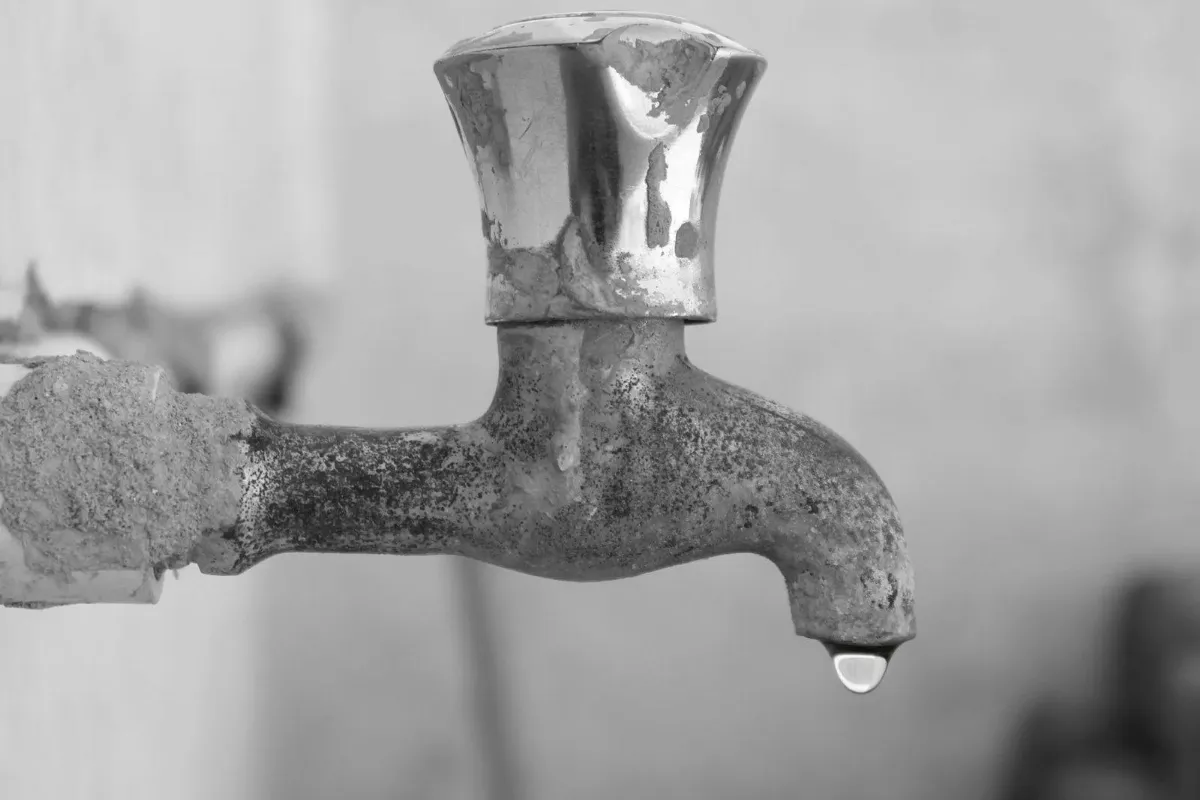
Hard water can influence plumbing performance by contributing to mineral deposits inside fixtures and water-using equipment.
These deposits may gradually accumulate in areas where water flows through narrow openings or is repeatedly heated.
Although hard water does not automatically damage every pipe, persistent scale formation can create maintenance concerns.
Can Hard Water Cause Buildup Inside Pipes?
Mineral deposits can develop inside certain plumbing materials and components over time.
Scale accumulation is influenced by water chemistry, temperature, and the condition of the plumbing system.
In some circumstances, deposits may narrow internal passages and affect water flow.
This can be particularly noticeable in smaller openings, such as faucet aerators and showerhead nozzles.
Possible signs include:
- Reduced flow from individual faucets
- Uneven spray patterns from showerheads
- Visible deposits around fixture openings
- Recurring mineral buildup after cleaning
- Restricted flow through affected components
However, reduced water pressure is not always caused by hard water.
Leaks, partially closed valves, clogged filters, pressure regulators, and other plumbing problems can produce similar symptoms.
A professional inspection can help identify whether mineral buildup is contributing to the issue.
Installing a water softener can help reduce new hardness-related deposits, but it does not automatically remove existing blockages or repair damaged plumbing.
Why Do Faucets and Showerheads Develop White Deposits?
Faucets and showerheads are frequently exposed to water that evaporates after use.
As the water dries, dissolved minerals can remain on the surface.
This creates the familiar white or chalky residue associated with hard water.
Over time, deposits may accumulate around faucet openings, showerhead nozzles, and other fixtures.
Homeowners may notice that these surfaces require frequent cleaning.
Soap scum can also develop when hardness minerals react with certain soap ingredients.
A water softener reduces the calcium and magnesium available to form these deposits.
This can make routine cleaning easier and help limit new scale accumulation.
However, existing mineral deposits may still need to be removed through appropriate cleaning or maintenance.
How Water Softeners Improve Plumbing and Appliance Performance
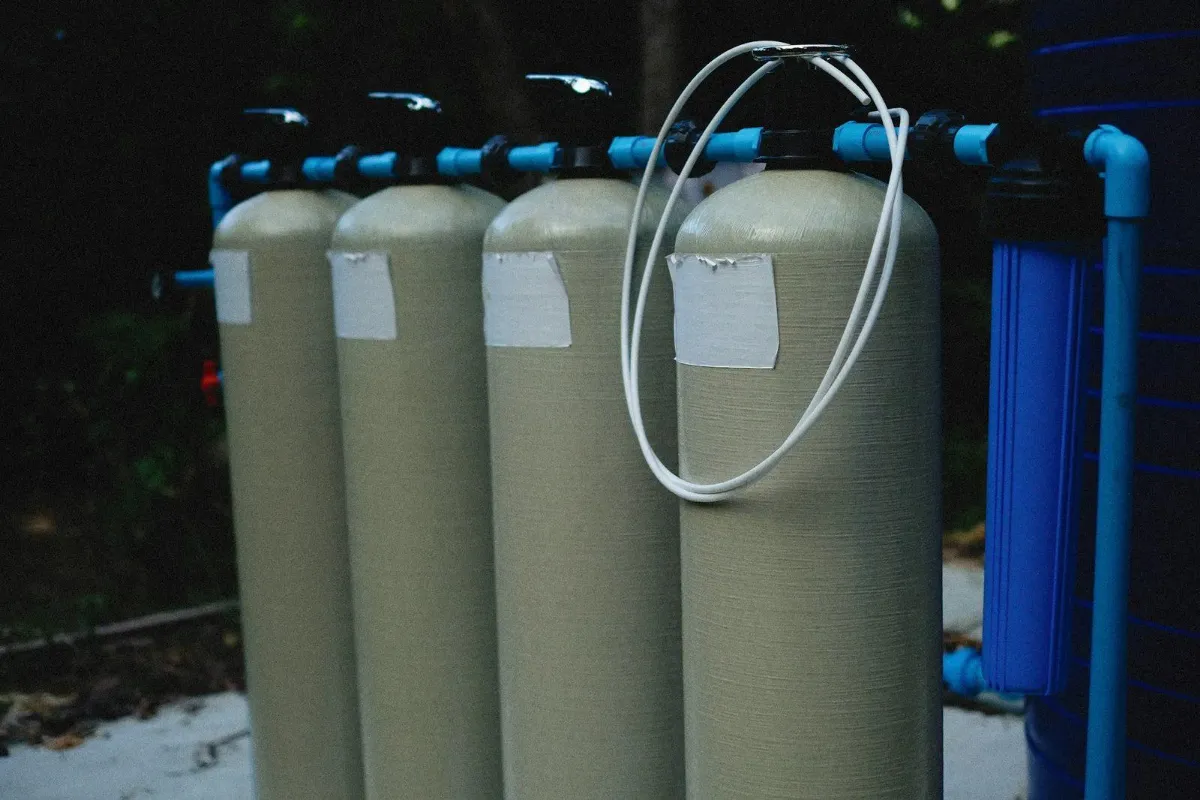
Water softeners are designed to reduce the hardness minerals responsible for many common scale problems.
By treating water before it enters household plumbing, these systems can help limit mineral accumulation inside fixtures and appliances.
The benefits depend on the home's actual water hardness, treatment equipment, and maintenance practices.
How Does a Water Softener Remove Hardness Minerals?
Most conventional residential water softeners use a process called ion exchange.
Water passes through a resin bed containing charged particles that exchange sodium or potassium ions for calcium and magnesium ions.
This reduces the hardness of the treated water.
Over time, the resin becomes saturated with hardness minerals.
The system then undergoes a regeneration cycle to restore its treatment capacity.
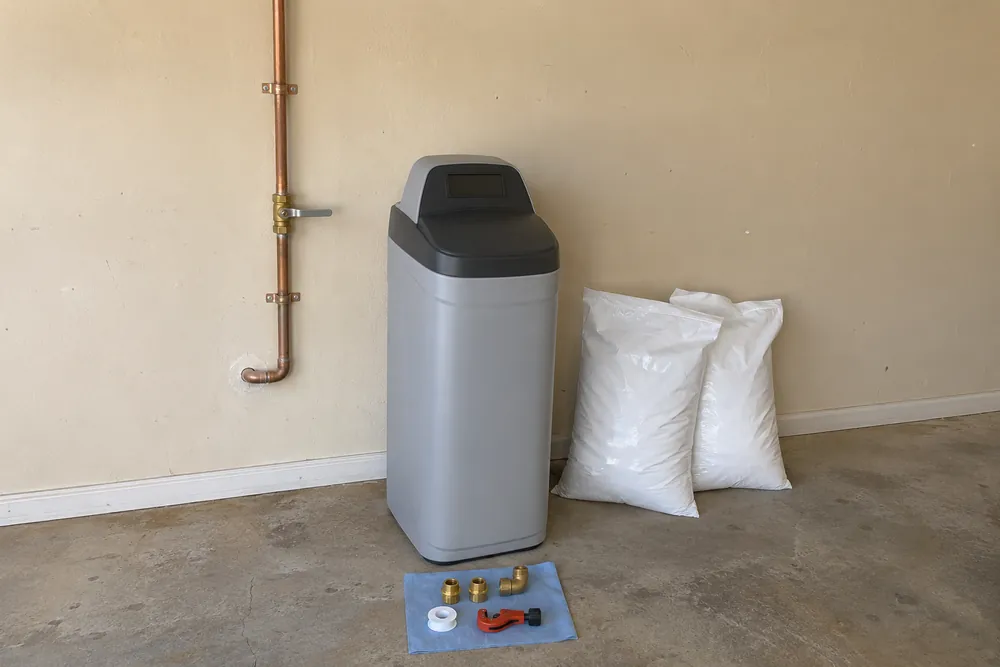
A typical water softener includes:
- A mineral or resin tank
- An electronic or mechanical control valve
- A brine tank for regeneration
- Water supply connections
- A drainage connection
- A bypass valve for servicing
The system must be appropriately sized and configured for the household's water conditions.
Water softeners primarily address calcium and magnesium hardness.
They do not replace all other types of water filtration or treatment.
Private well systems, for example, may require additional testing for sediment, iron, or other substances.
How Can Softened Water Help Water Heaters and Appliances?
Water heaters are among the household appliances most affected by mineral scale.
When hard water is heated, calcium and magnesium compounds may form deposits on internal heating surfaces.
In storage-tank water heaters, sediment can accumulate near the bottom of the tank.
Tankless systems may develop scale inside heat exchangers and narrow water passages.
This buildup can interfere with heat transfer and contribute to maintenance problems.
Reducing water hardness may help:
- Limit new scale formation
- Reduce mineral accumulation on heating components
- Support more consistent equipment performance
- Reduce certain hardness-related maintenance requirements
- Minimize deposits in water-using appliances
- Improve the performance of some soaps and detergents
Other appliances, including dishwashers and washing machines, may also benefit from reduced mineral buildup.
However, softened water does not guarantee longer appliance life or eliminate every repair.
Equipment still requires appropriate maintenance according to manufacturer recommendations.
What Should Hill Country Homeowners Consider Before Installing a Water Softener?
Choosing a water softener should begin with understanding the property's water supply.
Not every home requires the same treatment system, and purchasing equipment without testing may lead to unnecessary expenses.
The right approach depends on measured hardness, household consumption, plumbing configuration, and other water-quality concerns.
Why Is Water Testing Important?
Water testing provides information about the minerals and other characteristics of the home's water supply.
A basic hardness test can measure calcium and magnesium concentrations.
This helps determine whether a water softener is likely to address the problems the homeowner is experiencing.
Testing can also help identify situations where additional treatment may be necessary.
For example, private well water may contain iron, sediment, or other substances that require separate treatment methods.
Before choosing equipment, homeowners should consider:
- Measured water hardness
- Municipal or private well supply
- Visible mineral deposits
- Existing water treatment equipment
- Household water consumption
- Plumbing and appliance concerns
Some homeowners may notice significant mineral deposits even when their water supply is otherwise suitable for everyday use.
Others may have water-quality concerns unrelated to hardness.
Testing helps distinguish between these situations.
How Is the Right Water Softener Selected?
A properly sized water softener should provide enough treatment capacity for the household without unnecessary equipment costs.
Sizing depends on both water hardness and water consumption.
A larger home does not automatically require the largest available system.
Important considerations include:
- Number of household occupants
- Estimated daily water usage
- Measured hardness concentration
- Peak water flow requirements
- Available installation space
- Plumbing connection locations
- Regeneration and maintenance requirements
Installation location is also important.
Whole-home water softeners are commonly installed near the point where water enters the property.
The system should have suitable plumbing access, drainage, and space for maintenance.
An experienced plumber can evaluate these requirements and recommend equipment suited to the property.
How Can Homeowners Maintain a Water Softener and Reduce Plumbing Problems?
Water softeners require periodic maintenance to continue reducing hardness effectively.
The exact maintenance schedule depends on the equipment type, water conditions, and manufacturer instructions.
Homeowners should also continue monitoring their plumbing and appliances for signs of mineral accumulation.
What Maintenance Does a Water Softener Need?
Conventional salt-based water softeners use a regeneration process that typically requires maintaining salt in the brine tank.
Homeowners should periodically check the salt level and confirm that the system is operating correctly.
Common maintenance tasks include:
- Monitoring salt levels
- Checking for salt bridging
- Inspecting connections for leaks
- Reviewing regeneration settings
- Following manufacturer cleaning instructions
- Testing treated water hardness when needed
If the water begins leaving noticeable mineral deposits again, the softener may need inspection.
Possible causes include incorrect settings, insufficient salt, a malfunctioning control valve, or other equipment problems.
Regular maintenance helps ensure that the system continues treating water as intended.
When Should You Contact a Plumber About Hard Water?
Homeowners should consider professional assistance when mineral buildup becomes persistent or begins affecting plumbing performance.
A plumber can evaluate whether water hardness is contributing to the problem and determine whether existing equipment needs maintenance.
Situations worth investigating include:
- Recurring scale around faucets
- Frequent showerhead blockages
- Mineral deposits inside water heaters
- Reduced appliance performance
- A water softener that stops treating water effectively
- Changes in water flow or pressure
- Questions about water softener replacement
For homes with private wells, water testing may be necessary before selecting treatment equipment.
A professional assessment can help determine whether water softening, additional filtration, or plumbing repairs are appropriate.
The goal is to address the actual problem rather than installing equipment that may not resolve the homeowner's concerns.
Protect Your Hill Country Plumbing With Bergheim Plumbing
Hard water can create ongoing maintenance concerns for homeowners throughout the Texas Hill Country.
From mineral deposits on faucets to scale accumulation inside water heaters, calcium and magnesium can affect plumbing fixtures and water-using appliances.
A properly selected water softener can help reduce new mineral buildup and make household water easier to manage.
However, effective treatment begins with understanding the home's water conditions and choosing equipment suited to its plumbing system.
Bergheim Plumbing provides water softener installation, replacement, and plumbing services throughout Spring Branch, Bergheim, Boerne, Bulverde, Kerrville, Canyon Lake, and surrounding Hill Country communities.
Family-owned since 1998, Bergheim Plumbing focuses on straightforward recommendations, transparent upfront pricing, and practical plumbing fixes that fit each property.
Whether you're dealing with recurring mineral deposits, water heater scale, or an aging water softener, the team can help evaluate your plumbing and discuss appropriate treatment options.
Call Bergheim Plumbing at (210) 264-1432 to discuss your hard water concerns and schedule a professional assessment.
Frequently asked questions
How does hard water affect plumbing over time?
Hard water can contribute to mineral scale inside plumbing fixtures, water heaters, and certain appliance components. Over time, buildup may restrict flow through affected openings or increase maintenance requirements.
How do water softeners improve plumbing?
Water softeners reduce calcium and magnesium hardness before water circulates through the home's plumbing system. This can help limit new mineral scale formation inside fixtures and water-using appliances.
Can a water softener remove existing scale from pipes?
A water softener primarily helps reduce new scale formation. It does not automatically remove established deposits or repair existing plumbing damage. Some components may still require cleaning, servicing, or replacement.
Is hard water common in Spring Branch and Boerne?
Hard water can occur throughout Spring Branch, Boerne, and other Hill Country communities because groundwater interacts with limestone formations. However, hardness levels vary by water source and property.
Do water softeners help protect tankless water heaters?
Reducing hardness can help limit scale accumulation inside tankless water heater heat exchangers. However, manufacturer-recommended inspection and descaling may still be necessary.
Should I test my water before buying a softener?
Yes. Water testing helps determine the hardness level and whether additional treatment may be needed. This information is important for selecting an appropriately sized water softener.

About the author
David Engel, owner, Bergheim Plumbing
David Engel started Bergheim Plumbing in Spring Branch in 1998 and holds Texas master plumber license M-36766. His son Colton works the trucks with him.